Why Bari Matters: Rival Claims, a Wider Attack Order and a Fragile Ceasefire
Analysis by South Sudan Press. Fighting at Bari, near Mundri in Western Equatoria, has produced incompatible accounts of who controls the government outpost. SPLA-IO says its Division 9A fighters captured it on 12 October. The South Sudan People’s Defence Forces (SSPDF) says it repelled the assault and remains in position. No independent account has settled that basic question.
What is established: Both sides acknowledge a confrontation. The SSPDF reports two of its soldiers wounded. The location’s control, total casualties and civilian impact have not been independently verified. An opposition account of an order to attack other government positions is a reported claim, not proof that a wider offensive is under way.
What did the opposition say it was trying to do?
In a statement reported by Sudans Post and The City Review, a spokesperson for SPLA-IO Sector Six said fighters under former Western Equatoria governor Alfred Futuyo Karaba took Bari and that he had ordered attacks on SSPDF positions across the state and sought to prevent elections there. The outlets did not independently verify the alleged order. We have not obtained the original signed directive or a direct explanation from Karaba of why this specific position was selected.
The statement, if authentic and implemented, would make Bari relevant beyond a single outpost: attacking government positions and interrupting an election are strategic aims. It does not establish that the fighters actually held the post or carried out further attacks.
Why the confrontation may have intensified
Three elements of the record help explain the political setting. First, Futuyo’s dismissal as governor in February 2025 preceded renewed armed activity by forces aligned with him in Western Equatoria. That sequence provides context but does not prove a direct cause of Monday’s attack. Second, the factions remain divided over implementation of the 2018 peace agreement and the conditions for December’s proposed vote. Third, Greater Mundri has already faced insecurity affecting roads and civilians; ceasefire monitors previously raised concerns about abductions and alleged forced recruitment in the area, according to a report of CTSAMVM’s technical meeting.
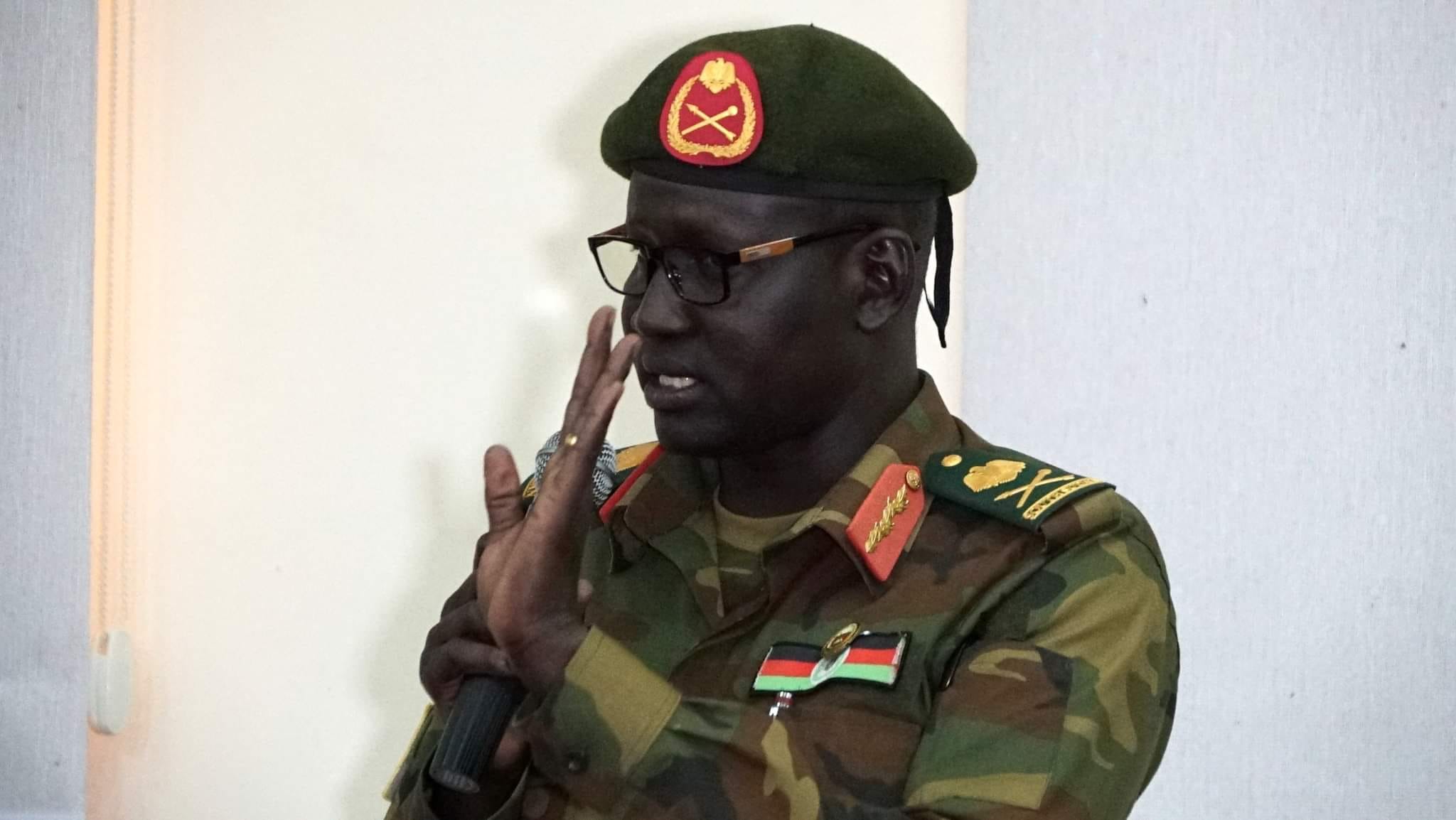
There is also a competing official interpretation. Maj. Gen. Lul Ruai Koang told King Media that divisions within SPLA-IO complicate engagement through one command structure. That is the army’s assessment; it does not establish who gave the Bari order or how much control any national opposition leadership exercises over local units.
What the battlefield claims cannot tell us
The opposition described an early-morning capture; one account of the army spokesperson placed an attack at about 5 p.m., while Eye Radio quoted him describing an early-morning attack. Place names also vary between reports, with Bari Boma located in Kotobi Payam in several accounts and Kokoti used in another. These differences warrant checking against residents, coordinates and military logs before reconstructing the operation.
Even if fighters briefly entered a position, that would not establish sustained control. Conversely, an SSPDF assertion that troops remained there requires independent corroboration. Neither side’s statement establishes whether civilians were injured or displaced, whether roads remain passable, or whether there was a counterattack.
The political test
Western Equatoria’s caretaker governor has publicly invited Futuyo and other armed men to return and participate in elections, according to Radio Tamazuj. The proposal will be tested against the security situation and whether any talks address command, guarantees, civilian protection and the broader peace framework. A public invitation by itself is not a ceasefire arrangement.
The immediate reporting priorities are confirmation of who controls Bari, casualty and displacement records, the original opposition statement and its chain of command, any CTSAMVM inquiry, and safe road access near Kotobi and Mundri. Until then, “SPLA-IO says it captured Bari; SSPDF denies losing it” remains the most accurate description.