
JUBA — Cabinet approved a further amendment to the National Elections Act at its 11 September meeting, proposing changes to constituency arrangements, parliamentary representation, the census requirement and the school calendar ahead of the planned 22 December election.
Cabinet approved the bill: Yes
Parliament passed it: Not yet
Presidential assent: Not yet
The amendments are law: Not yet
NEC has already published a 102-constituency arrangement: Yes
What Cabinet approved
The proposals would restore the 102 geographical constituencies used for the 2010 election, establish a 332-member National Legislative Assembly, provide representation through constituencies, party representation and affirmative-action categories, and remove provisions tying elections to completion of a population census.
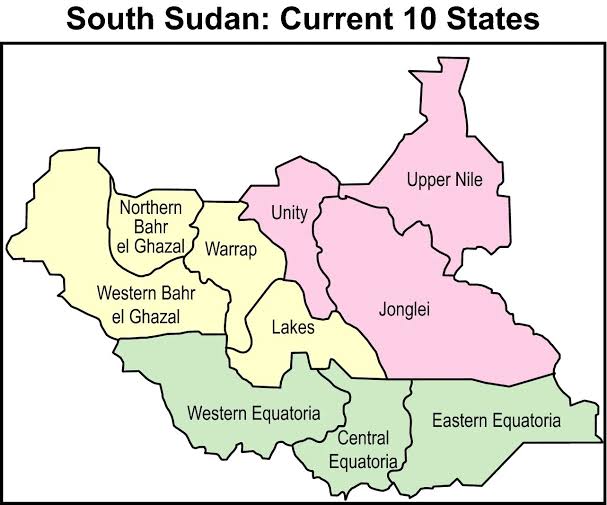
Context map: South Sudan’s ten states. The election framework also covers the three administrative areas. This map illustrates state geography; it does not show the 102 electoral constituency boundaries.
Why the 2010 constituencies matter
The NEC had already published a 102-constituency arrangement covering the ten states and three administrative areas. It remains unclear whether the proposed amendment simply supplies clearer statutory authority for that arrangement or changes boundaries, seat allocations or representation rules.
Using the 2010 framework without a new census also raises questions about population movement, displacement, new administrative arrangements and equal representation.
Schools and December polling
The proposal would move national primary and secondary examinations into November so schools can serve as polling centres in December. The revised examination calendar has not yet been published, so exact dates remain unverified.
The missing 332-seat formula
The amendment bill and explanatory memorandum have not yet been published. The precise division of the proposed 332 seats among geographical constituencies, party representation and affirmative-action categories therefore remains unresolved.
Cabinet approval ✓ → Bill tabled in TNLA → Committee review → Parliamentary vote → Presidential assent → Gazette/publication → NEC implementation
Why timing matters
Core electoral rules are being revised only months before the planned vote and immediately before the 17 September inter-party dialogue. Constituency arrangements and seat allocation affect political representation, candidate strategies, ballot design and potential legal challenges.
Questions Parliament must answer
What is the complete 332-seat formula? Can constituency boundaries be challenged? How are Abyei, Ruweng and Greater Pibor treated? What are the implications for state and local elections? Will the public be able to examine the bill before passage? And can education authorities move national examinations into November without disrupting learners?
For dedicated election timelines, constituencies and civic information, visit SouthSudanElections.org →