ANALYSIS · PUBLIC FINANCE · SUNDAY, 8 NOVEMBER 2026
The Hidden Cost of Closing a Local Clinic
Healthcare budgets should track continuity and patient access alongside grants, facility lists and hospital admissions.
South Sudan Press · Analysis
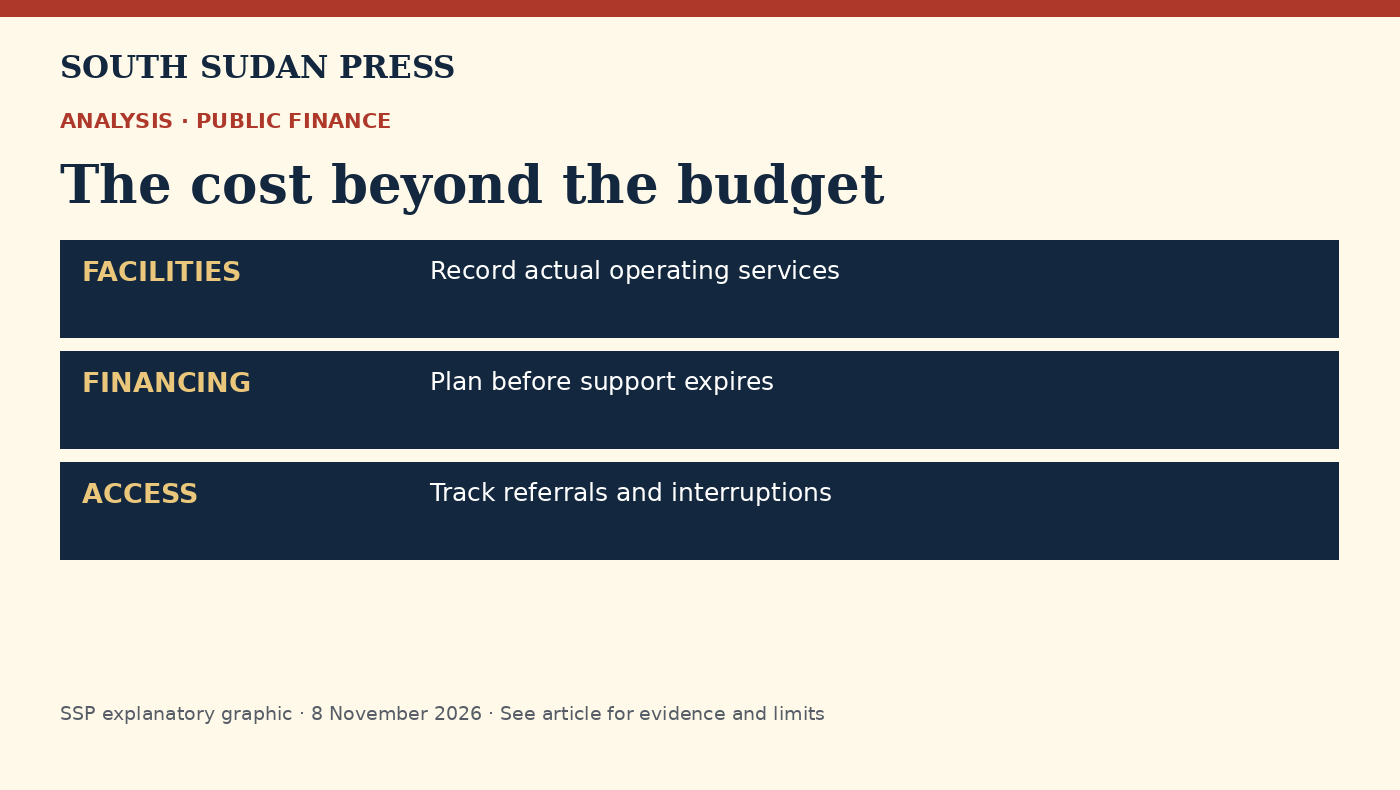
When a clinic closes, an institution may record a reduction in spending. The cost can reappear elsewhere: in a family’s transport bill, a lost working day or a hospital treating a complication that could have been addressed earlier. A sound healthcare budget should make these transfers visible.
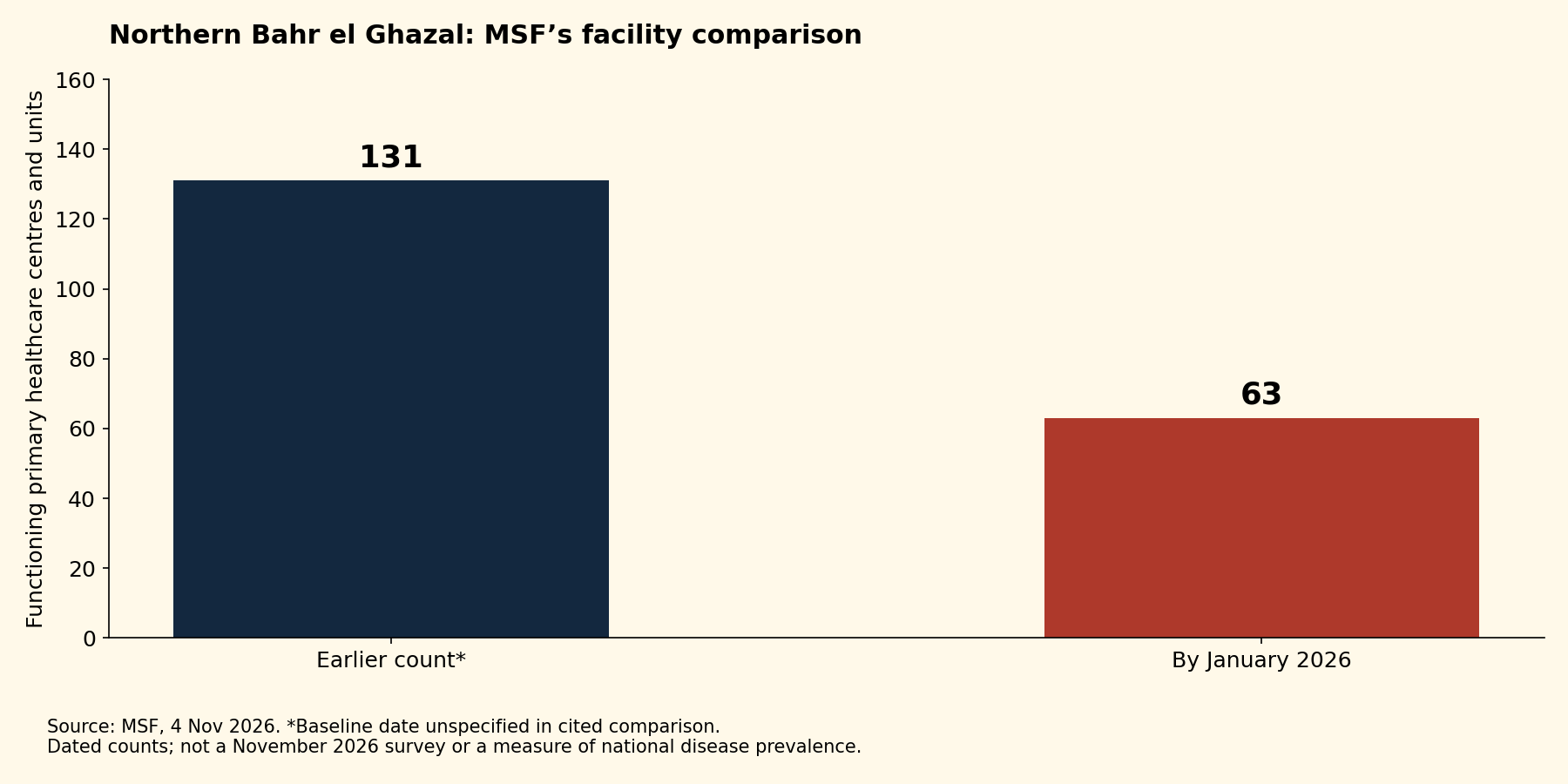
MSF’s November account of Aweil and Akobo provides the warning behind this analysis. Its dated Northern Bahr el Ghazal figures show 131 functioning primary facilities falling to 63 by January 2026. The comparison is not a live November census and cannot by itself attribute every closure to one cause.
Count the service rather than the signboard
A facility can exist in an inventory while a patient finds no clinician, medicine or functioning referral arrangement. Governments and partners should therefore define a minimum package and publish whether it is actually available. The relevant unit is a service delivered over time, not only a building or a grant agreement.
Such a system would record opening hours, staffing, essential supplies and referral capability. It would identify interruptions and name the body responsible for explaining them. Communities could then report discrepancies between the published status and what happens at the door.
Put continuity into financing decisions
Short funding cycles create a recurring handover problem. A project may reach its end date before the next provider can recruit staff, obtain supplies or receive funds. Extending a grant on paper does not necessarily eliminate the gap experienced by patients.
Continuity planning should start before expiry. A transparent schedule would show when funding ends, which services are at risk, whether a replacement has committed and what bridge arrangements exist. Where money is unavailable, authorities should explain the prioritisation openly rather than leave families to discover closure during an emergency.
Domestic public financing also needs scrutiny. A realistic debate should identify actual releases and expenditure, the reliability of staff payments and whether supplies reach facilities. Announced allocations are not evidence of cash received or care delivered.
Evaluate results carefully
More hospital admissions may signal increased illness, improved access, displaced demand or several factors together. They should not be used alone to estimate community disease rates or prove the effect of a particular funding decision.
Likewise, fewer functioning facilities do not show how many patients lost access unless catchment areas, alternative services and transport conditions are examined. The accompanying chart describes the facility counts reported by MSF; it does not estimate deaths or current national coverage.
A useful recovery plan would link money to measurable continuity: fewer interruptions, reliable referrals and services families can reach. The policy objective is to prevent an accounting saving in one place from becoming a larger human and financial cost elsewhere.
Sources and reporting note
Reporting compiled from linked published sources. Questions and proposed checks are editorial follow-ups; this edition does not claim that SSP conducted interviews or sent requests.
ADVERTISEMENT · CYBERPASS ACADEMY

Online learning planned from early 2027. Visit www.CyberPass.co for programme announcements. Course dates, fees and enrolment details to be announced.