ANALYSIS · ELECTIONS · SUNDAY, 8 NOVEMBER 2026
Beyond Nine of Thirteen: What Would Prove Registration Is Ready?
A delivery count measures reach. A credible readiness system must show whether each centre can serve eligible citizens under published rules.
South Sudan Press · Analysis
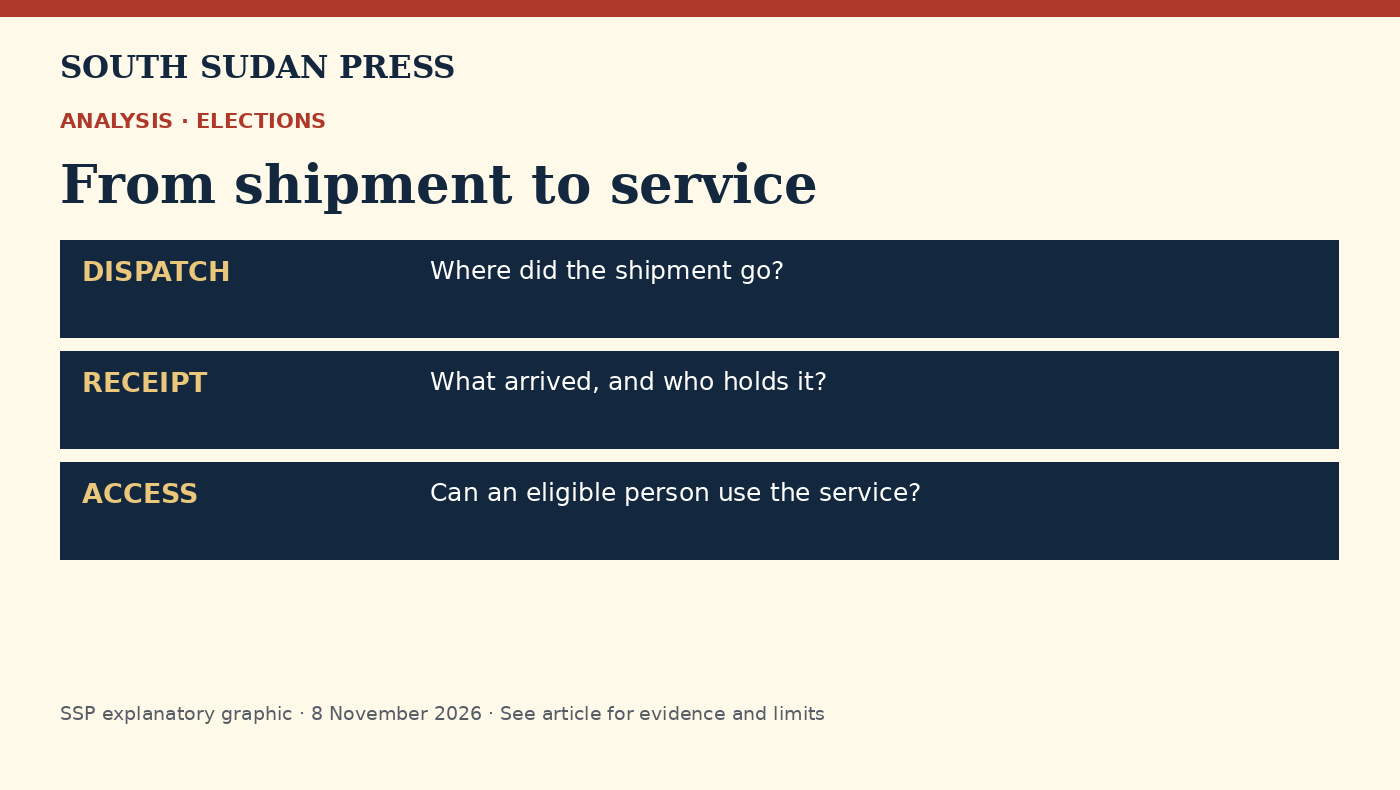
A consignment arriving in a capital is visible progress. It is also a poor substitute for evidence that an individual registration centre can open. South Sudan needs to distinguish these two achievements before a distribution headline becomes an unsupported assurance of national readiness.
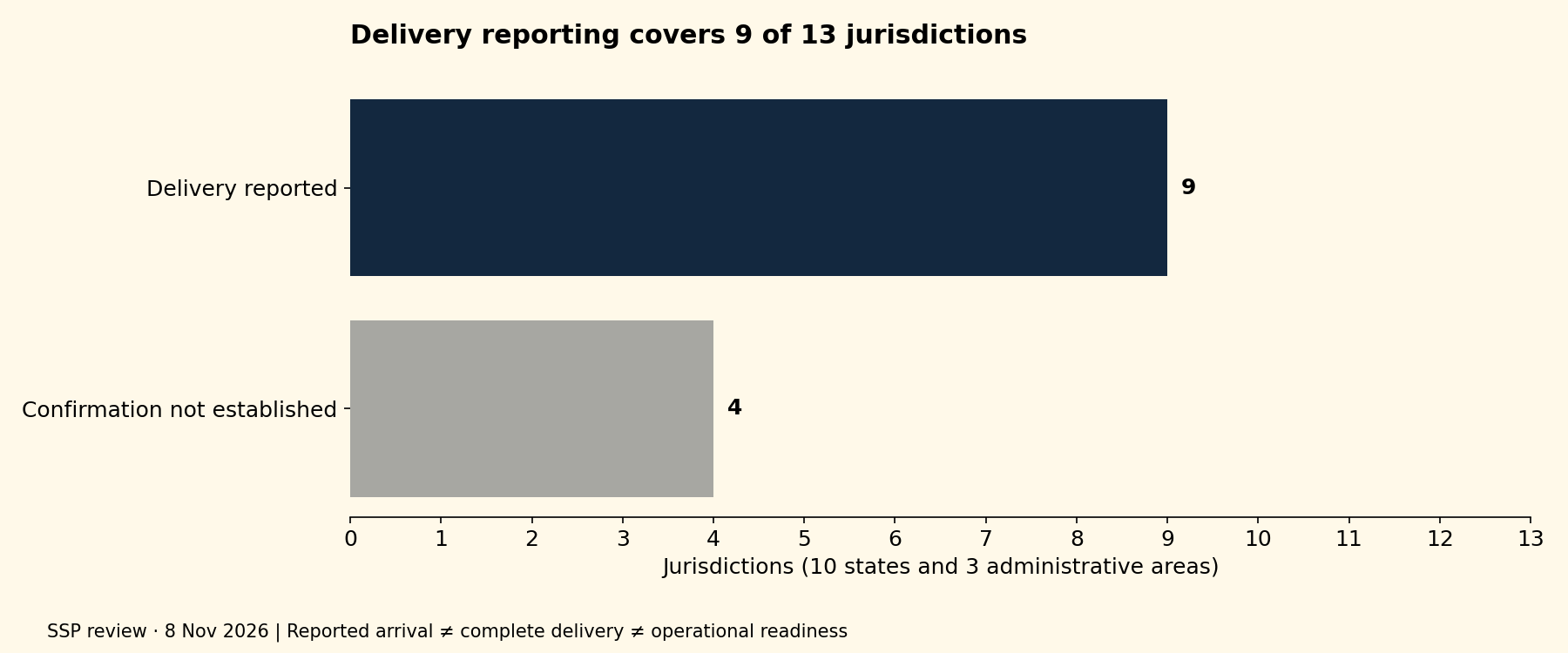
The nine-of-thirteen count in this edition combines publicly reported jurisdiction-level deliveries. It does not measure population coverage, the proportion of books received or the number of centres supplied. A small jurisdiction and a large one each contribute one unit to that count; a partial shipment and a complete shipment may do the same.
Replace a single score with a chain of evidence
An effective tracker should record allocation, dispatch, receipt, onward delivery and operational status separately. These stages should have dates, responsible officers and supporting records. A dispatch document answers where materials were sent; a signed receipt answers what arrived. Neither establishes that trained staff and accessible premises are available.
The next layer is centre-level readiness. A useful public entry would name the location, explain access arrangements, state the operating period and identify the responsible official. Internally, administrators need to reconcile numbered books, protect unused stock and document movement between stores and registration teams.
These are proposed accountability measures, not findings that every committee has failed to maintain such records. The problem is the difference between administrative confidence and evidence the public can inspect.
An opening notice is part of the operation
Dates, places and eligibility rules make logistics usable. Without them, households must decide whether to spend money on a journey without knowing whether a service is available. People who work away from home, have limited mobility or need assistance face additional planning costs.
Public information should therefore travel through radio and local noticeboards as well as websites. A document uploaded nationally is not automatically understood locally. The same instructions should reach officials, parties, community organisers and citizens, with a clear procedure for correcting an erroneous announcement.
Registration must also be distinguished from polling. A proposed registration location should not be advertised as a confirmed place to vote. Independent civic sites can organise information and explain procedures, but the original NEC notice should remain visible and dated.
Measure readiness without rewarding exaggeration
A national average can hide places where no service is accessible. Publishing the underlying entries allows communities to challenge mistakes and journalists to test reassuring totals against actual conditions.
The useful question is no longer simply how many jurisdictions have received a shipment. It is whether an eligible person can locate an authorised centre, understand the rules, complete registration and later correct an error. Those outcomes would give the delivery count democratic meaning.
Publicly reported delivery tracker · 8 November review
This is a reporting tracker, not an NEC certification of readiness. Sources: City Review (4 November dispatch account), Radio Tamazuj (6–7 November) and SSBC (6 November).
| Jurisdiction | Reporting status | Important limitation |
|---|---|---|
| Central Equatoria | Delivery reported | Quantity/completeness not audited here |
| Northern Bahr el Ghazal | Delivery reported | 6,864 books reported in earlier NEC account |
| Unity | Delivery reported | 3,300 books reported in earlier NEC account |
| Greater Pibor | Delivery reported | 1,397 books reported in earlier NEC account |
| Ruweng | Delivery reported | 1,364 books reported in earlier NEC account |
| Abyei | Delivery reported | 781 books; status dispute not resolved by delivery |
| Western Equatoria | Partial receipt reported | About 1,000 of 2,500 allocated books initially received |
| Upper Nile | Delivery reported | Quantities not disclosed in reviewed account |
| Western Bahr el Ghazal | Delivery reported | 70 cartons; book total and completeness unclear |
| Eastern Equatoria | Confirmation not established | Not evidence of non-delivery |
| Jonglei | Confirmation not established | Not evidence of non-delivery |
| Lakes | Confirmation not established | Not evidence of non-delivery |
| Warrap | Confirmation not established | Not evidence of non-delivery |
Sources and reporting note
- https://cityreviewsouthsudan.com/nec-appoints-returning-officers-for-all-10-states-dispatches-election-materials-to-regions/
- https://nec.gov.ss/news/
Reporting compiled from linked published sources. Questions and proposed checks are editorial follow-ups; this edition does not claim that SSP conducted interviews or sent requests.
Understand the process. Check your location.
SouthSudanElections.org — learn about election participation →
SouthSudanVoting.info — explore area guidance and voting information →
These are independent civic resources. Confirm registration dates, eligibility rules and centre locations against a current NEC notice. A registration centre is not automatically a polling station. A confirmed nationwide centre directory was not verified for this edition.
ADVERTISEMENT · CYBERPASS ACADEMY

Online learning planned from early 2027. Visit www.CyberPass.co for programme announcements. Course dates, fees and enrolment details to be announced.