ANALYSIS · 7 NOVEMBER 2026
What an oil prepayment dispute can tell us about the budget
Analysis: the records needed to trace an advance from the treasury to a cargo delivery.
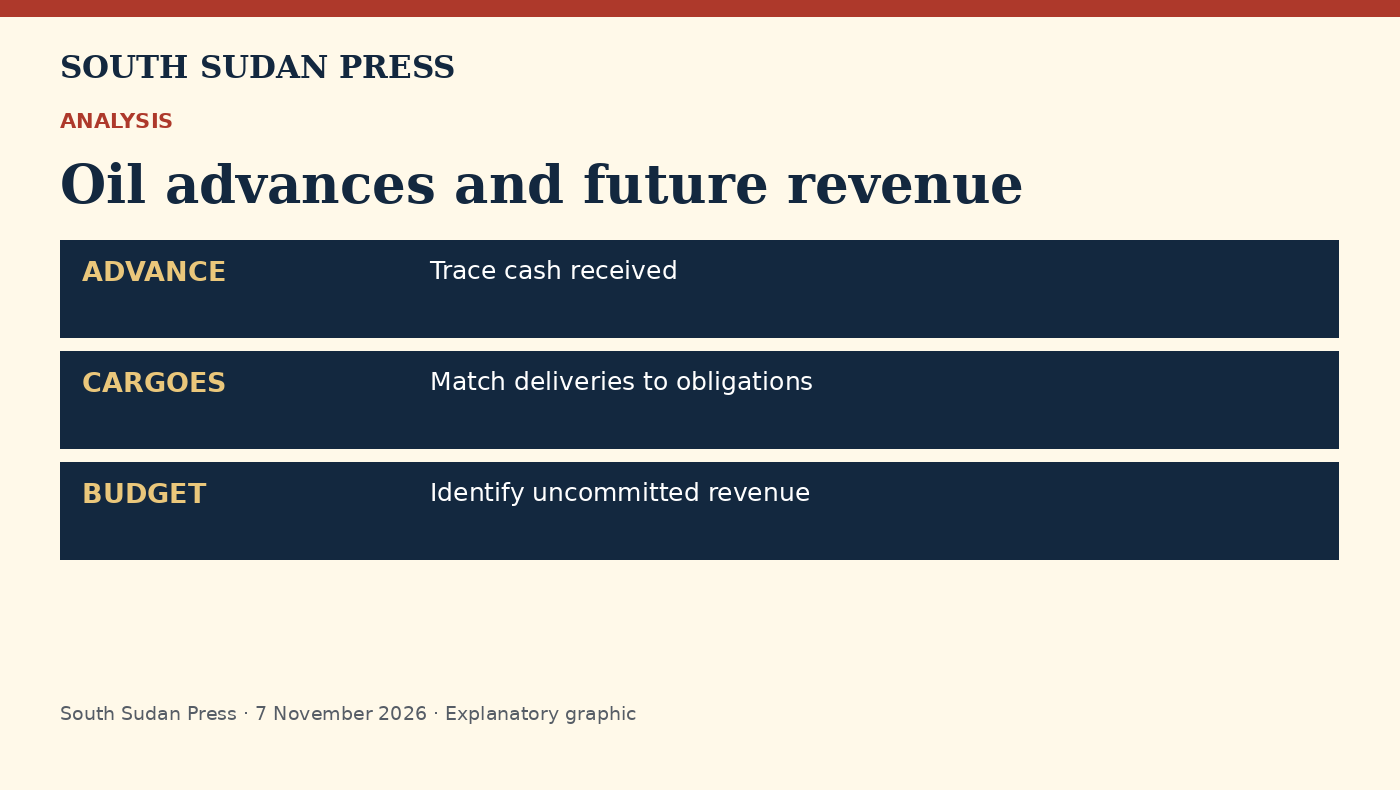
The most useful number in an oil prepayment dispute is rarely the headline claim. For budget purposes, the starting point is the net cash received: the advance less any charges withheld, followed by where the proceeds went and when the obligation fell due.
The next record is a cargo ledger. It should show each shipment promised, loaded and credited against the advance. When a cargo is sold for cash instead of delivered to a creditor, the ledger should explain whether it was substituted, rescheduled or left in dispute. That is how an auditor could test for competing commitments. The public reports on Sahara’s claim do not establish that the same cargo was promised twice.
Budget exposure depends on which export proceeds remain free after contractual commitments, operating costs and other deductions. A rescheduled delivery can shift cash between budget periods; a disputed delivery can create uncertainty without immediately removing cash. Any injunction or enforcement measure would have to be examined on its own terms rather than assumed from the filing.
The sensible disclosure would reconcile contract balances, advance receipts and credited cargoes as of a common date. The government could publish a summary by creditor and distinguish principal, interest and disputed amounts, with independent audit access to the supporting contracts. Until there is such a reconciliation, an earlier UN estimate and a later lawsuit should remain separate figures.