ANALYSIS · 7 NOVEMBER 2026
How a physical voter register earns public trust
Analysis: the NEC’s warning is useful, but voters also need clear access rules and a way to correct mistakes.
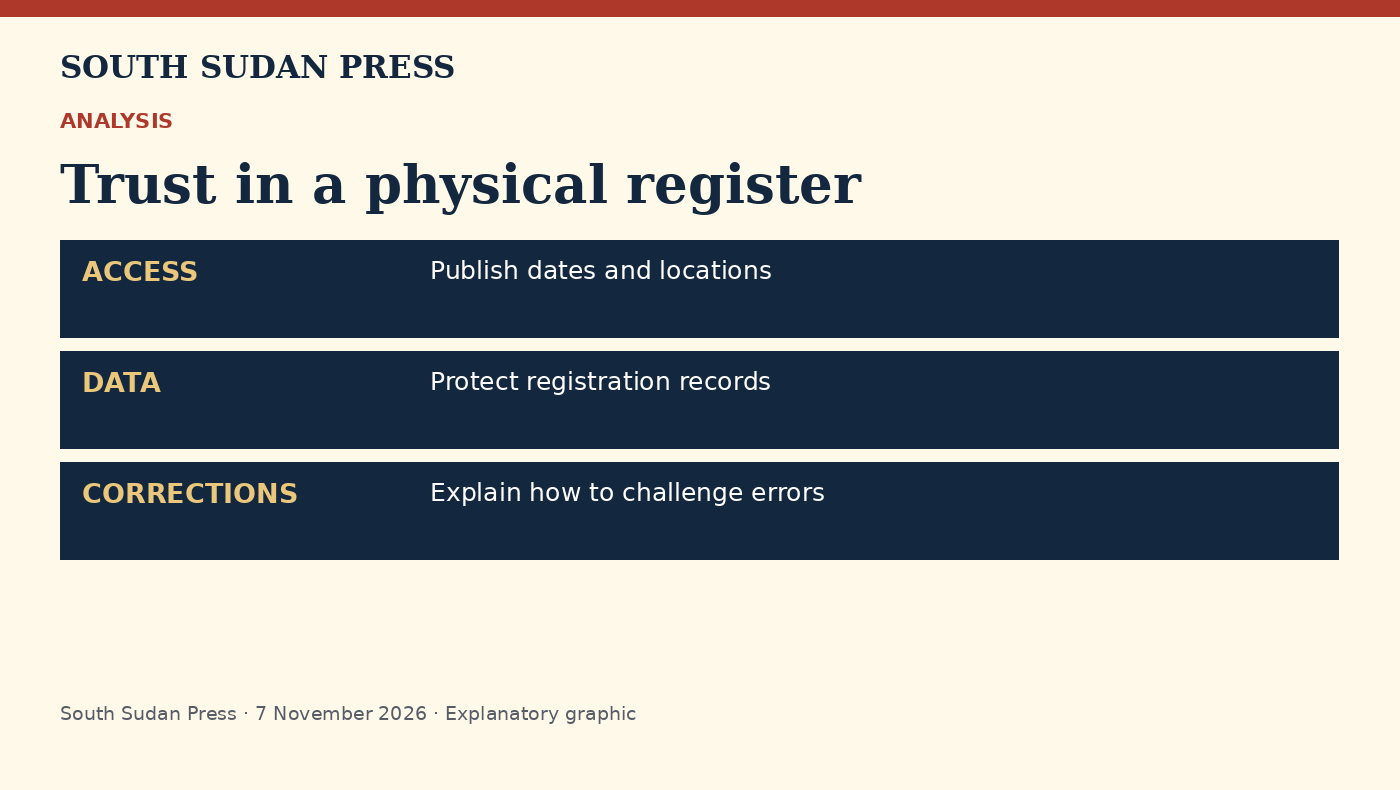
A fake form can spread quickly when the official answer to a practical question is hard to find. The most useful response is a dated notice that explains where people register, what proof they need and what to do if they cannot meet the standard requirement.
The notice should be available online, on radio and through local election offices. Centre lists should be published in a form people can read on a phone and print locally. Identifying a centre is a planning step; opening it requires staff, materials and transport. Reporting those milestones separately would show where assistance is still needed.
A paper process still handles sensitive information. The commission should explain who may collect each field, who can access it and how completed books move from the centre to storage. A public register inspection procedure should let voters check their entries while limiting unnecessary exposure of personal details.
Finally, people need a deadline and an accessible route to challenge a missing or incorrect entry. Publishing how complaints are resolved would make the register easier to audit and help separate genuine service problems from rumours. These are proposed safeguards, not claims that the NEC has adopted them.
For civic education, see SouthSudanElections.org. Follow the NEC for official notices.