MONDAY · 2 NOVEMBER 2026 · ANALYSIS
From Regional Approval to a Real Classroom: South Sudan’s AI Readiness Test
The first task is to establish a deliverable national plan, not mistake regional approval for classroom access.
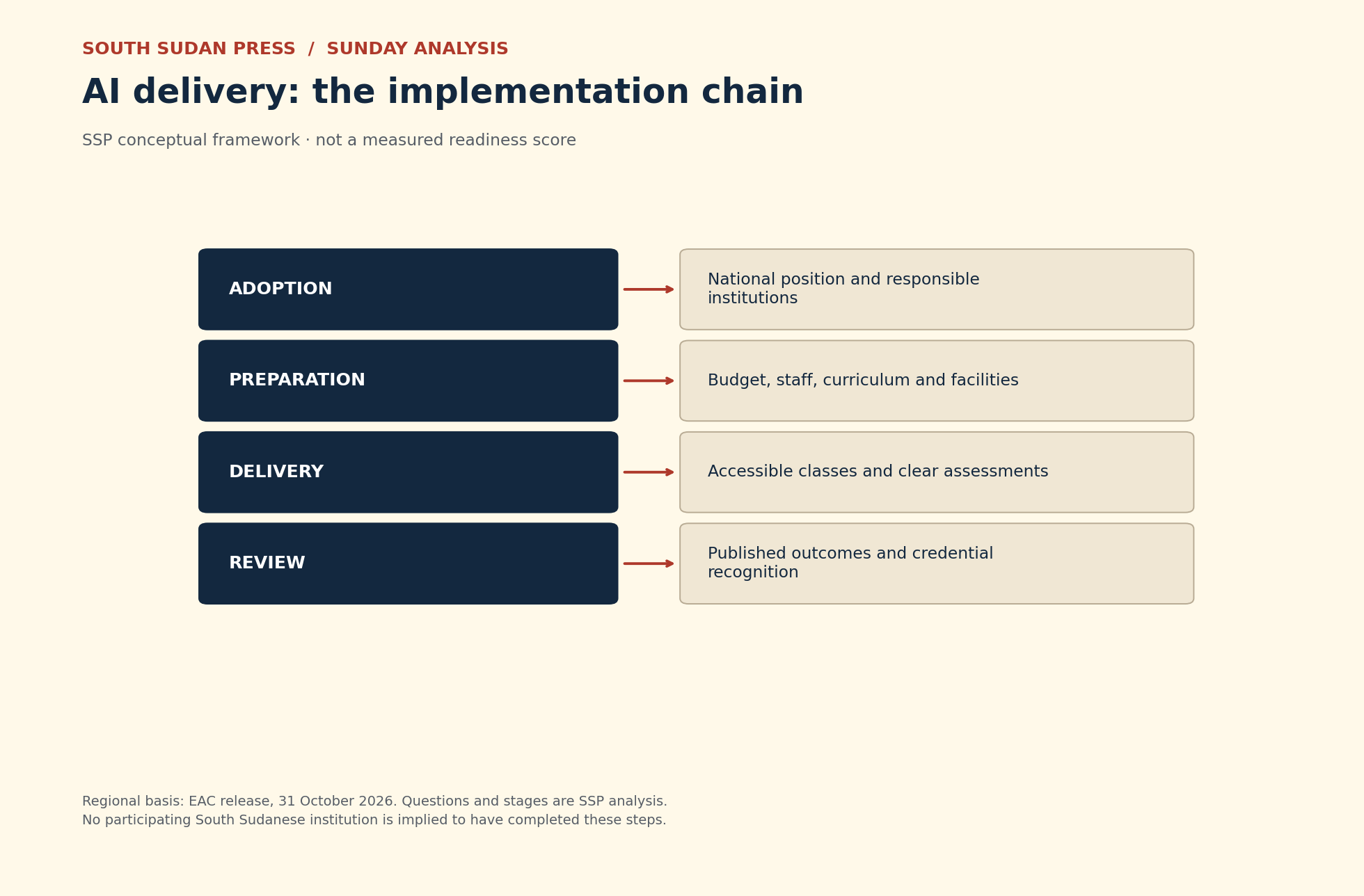
The EAC’s education decision creates an opportunity for South Sudan to shape how students learn about AI. The harder question is whether institutions can provide useful instruction consistently. A policy announcement can define ambition without establishing who will teach, which facilities students can use or how learning will be assessed.
The accompanying process chart is a framework for evaluating implementation. It assigns no readiness percentage and does not claim that particular universities have passed or failed an audit. Its stages are proposed reporting tests: national adoption, institutional preparation, classroom delivery and independently reviewable outcomes.
A credible first publication would name responsible institutions and explain the adoption decision. A university would then need to identify curriculum ownership, staff preparation and assessment arrangements. These are organizational decisions that a regional framework cannot settle for every campus.
Cost deserves attention before enrolment is promised. The relevant budget includes equipment, connectivity, electricity, lecturer time and maintenance. A programme that depends on costs students cannot meet may widen differences in access even if the same curriculum is formally available to everyone. This is a risk to examine, not a measured finding about current campuses.
Teaching should also include critical evaluation. Students need to distinguish a generated answer from verified evidence and understand when personal or institutional information should not be entered into a tool. Those are proposed curriculum priorities; this article does not claim that they already appear in an approved South Sudan syllabus.
For TVET, the central distinction is between comparable standards and automatic recognition. Institutions and learners need implementation notices explaining how qualifications will be assessed. A regional framework should not be marketed as an unconditional employment or licensing guarantee.
The first national report should therefore publish a small set of verifiable commitments: participating institutions, responsible officials, costs, lecturer preparation, accessibility arrangements and a timetable. Progress can then be judged against those commitments. The policy opportunity becomes meaningful when students can identify a course they can actually attend and a credential whose status they can verify.
Sources and verification
Prepared for 2 November 2026. Allegations and reporting gaps are identified in the text. No new SSP interview or field visit is claimed. Follow-up questions have not been sent as requests.
Monday front page → · Jobs & Careers → · Election information →