
South Sudan’s oil economy presents a basic accountability question: communities living beside wells, pipelines, waste facilities and production infrastructure carry environmental and safety risks, but can government and operators show what those communities have received in return?
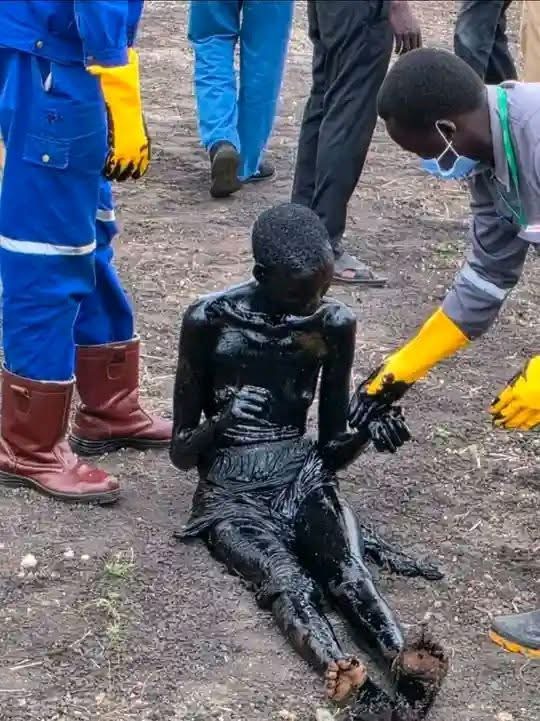
The question has become more immediate after a September 2026 incident at an oil-waste site in Unity State and a separate inquiry in Melut County, Upper Nile State, into delayed transfers of the statutory three-percent community share of net petroleum revenue.
Environmental and safety burden
Research and public reporting over several years have identified concerns involving produced water, drilling waste, open or poorly protected waste areas, pipeline leaks, contaminated soil or water, livestock access and the potential spread of contaminants during flooding. These hazards do not establish that every illness reported in producing communities was caused by petroleum operations, but they create legitimate questions about exposure, monitoring and remediation.
Earlier field research in Melut recommended fencing oil facilities and hazardous areas to prevent access by people, livestock and wildlife. The latest Unity State incident again puts physical containment, warning systems and access control under scrutiny.
Preliminary oil-field safety warning tracker
Distinct documented examples identified in SSP’s initial source review. These are evidence flags, not national incident totals and not estimates of unreported events.
The safety record needs a public register
South Sudan does not have a readily accessible public incident register that allows residents to see every spill, near miss, hazardous-waste exposure, investigation and remediation action. That makes it impossible to responsibly calculate how many incidents “went unreported.” SSP will therefore track what can be documented and separately mark cases where remediation or closure cannot be verified.
Date → location → operator/block → event → hazard → people affected → environmental/livestock impact → regulator notified? → investigation → remediation → independently verified closure?
The other side of the ledger: what communities should receive
South Sudan’s petroleum framework allocates 3% of net petroleum revenue to producing communities, alongside a 2% allocation to producing states. The community entitlement should not be confused with corporate social-responsibility projects funded separately by oil operators.
For accountability purposes, every benefit should be classified as either a statutory petroleum-revenue project, a government budget service, an operator-funded community project, or another donor/private intervention. Without that distinction, communities cannot tell whether their legal entitlement has actually been delivered.
| What communities bear | What should be measurable in return |
|---|---|
| Pollution and waste exposure risk | Environmental monitoring, containment and remediation |
| Land and livelihood disruption | Compensation, agricultural/livestock support and restored land |
| Industrial health and safety risk | Accessible clinics, emergency response and exposure monitoring |
| Extraction of a finite resource | 3% net petroleum-revenue community entitlement and durable assets |
| Oil infrastructure around settlements | Safe roads, clean water, schools and other functioning services |
| Local social and economic disruption | Transparent local recruitment, apprenticeships and skilled employment |
Jobs: “local employment” needs numbers
Claims that petroleum development creates employment should be tested against a transparent workforce breakdown: total workforce, South Sudanese employees, employees recruited from the producing state and county, residents of directly affected communities, women employed, skilled and management positions, contractors, apprenticeships and scholarships.
Without those figures, “jobs created” is not enough to show whether people living beside the oilfields are participating meaningfully in the industry extracting resources from their land.
Health: contamination is not the same as causation
Studies and community testimony have raised concerns about skin conditions, reproductive health, livestock deaths and other illnesses in producing areas. Some research has detected contaminants in environmental samples. But proving that a particular person’s illness was caused by petroleum exposure requires stronger epidemiological and clinical evidence.
A credible health investigation therefore needs longitudinal data from hospitals and clinics, independent testing of drinking water, soil and livestock exposure, and transparent disclosure of environmental-monitoring results. SSP will distinguish documented contamination, plausible exposure, reported illness and medically established causation.
From promises to delivery
Promised → budgeted → money transferred → project delivered → service functional today → independently verified
This framework can be applied to schools, health centres, boreholes, roads, electricity, scholarships, environmental remediation and employment programs. A building that was announced but never completed is not a delivered benefit; a clinic without staff or medicine is not equivalent to a functioning health service.
Melut is the immediate test
Melut County’s new inquiry into delayed community petroleum revenue provides a practical starting point. The central document SSP wants is a complete revenue ledger showing production periods, net petroleum revenue, calculated community entitlement, amounts authorised and transferred, receiving accounts, expenditures and named projects.
Once those records are available, the debate can move from allegation and political statement to auditable numbers.
The investigation ahead
South Sudan Press will develop The Oil Dividend as an evidence-led accountability project covering revenue, environment, safety, health, employment and community development in producing areas. The central question is not whether petroleum has produced some benefits. It is whether the benefits promised by law, government and operators can be measured against the risks and costs borne by the communities closest to production.