Analysis scope
This article maps documented centres of authority rather than declaring a legitimate winner of the SPLM-IO leadership dispute. Allegiances are fluid and sometimes contested; political claims do not automatically establish military command or territorial control.
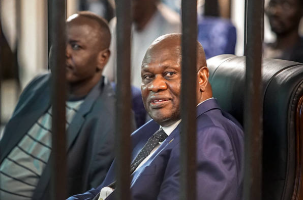
For years, Riek Machar was not merely the chairman of the Sudan People's Liberation Movement in Opposition. He was the movement's central political reference point: the figure through whom its negotiating position, senior appointments and relationship with the peace process were largely understood.
His detention in March 2025 did not simply remove an active leader from day-to-day politics. It forced the movement to answer a question that political organisations often postpone while a dominant founder remains in place: who has authority when the leader cannot exercise it?
By September 2026, that question has produced competing suspensions, rival claims to acting authority, a separate Juba-based leadership and disputes that reach into military and state-level structures.
Machar remains the reference point—but not the active centre
Machar remains the chairman claimed by the wing of the SPLM-IO that rejects efforts to replace him. But detention and court proceedings have limited his ability to exercise ordinary political leadership, creating space for deputies, party organs and rival structures to interpret what interim authority means.
This distinction matters. A movement can continue to recognise a chairman symbolically or constitutionally while disagreeing over who may issue orders in his absence.
Centre one: Oyet's claim to acting authority
Nathaniel Oyet Pierino, the movement's deputy chairman, has acted as chairman during Machar's detention and argues that his authority follows from the party's internal rules. On 31 August he suspended interim secretary-general Regina Joseph Kaba and seven other senior officials, describing the action as an administrative and disciplinary process.
Oyet's position is therefore not that Machar has been replaced. It is that the deputy chairmanship carries acting authority while the chairman cannot exercise his functions.
Centre two: Kaba and the collective Political Bureau claim
Kaba rejected Oyet's suspension and issued a counter-order suspending him from his deputy and acting-chairman roles. Her account places greater authority in the Political Bureau and the principle of collective leadership.
Radio Tamazuj reported that Kaba said the Political Bureau had reaffirmed collective leadership at an August 27 meeting and had directed Oyet to observe the party constitution. Her counter-order instructed political, military, financial and administrative structures not to recognise directives issued by Oyet in his claimed acting capacity.
The dispute is therefore more than a personal quarrel. Each side invokes institutional procedure: one emphasizes succession through the deputy chairman; the other emphasizes the authority of the Political Bureau and collective decision-making.
Centre three: the Stephen Par Kuol-led Juba structure
A separate Juba-based SPLM-IO interim leadership led by Peacebuilding Minister Stephen Par Kuol emerged after Machar's detention. Radio Tamazuj has reported that this structure pledged cooperation with President Salva Kiir's government in implementing the 2018 peace agreement and has supported the government's election timetable.
It should not be mechanically merged with the Oyet–Kaba dispute. The Juba-based structure represents a more developed organisational separation, while the Oyet and Kaba camps are competing over authority within structures that continue to invoke Machar and the movement's existing constitution.
The military map is not the political map
The most consequential uncertainty concerns the SPLA-IO. Political leaders may issue appointments, suspensions and directives, but those documents do not automatically prove that commanders or troops have changed allegiance.
Recent disputes illustrate this problem. In Western Bahr el Ghazal, senior SPLA-IO officers publicly rejected promotions and integration arrangements they said were not agreed with the leadership they recognised. In Unity State, competing political orders have also reached military appointments and command claims.
For that reason, South Sudan Press will treat every claimed military alignment separately: a written appointment is evidence that an order was issued, not proof that a commander accepted it or that troops followed it.
A faction map—without pretending the boundaries are fixed
| Centre / structure | Claim to authority | Relationship to Machar | What remains unresolved |
|---|---|---|---|
| Machar-aligned movement | Machar remains chairman; interim authority disputed | Directly retains Machar as chairman | Who may lawfully exercise chairman's powers during detention |
| Oyet acting leadership | Deputy chairman exercises acting authority | Does not formally replace Machar | Extent of Political Bureau and military recognition |
| Kaba / Political Bureau camp | Collective party organs can constrain or suspend acting chairman | Continues to invoke existing movement structures | Authority and membership of relevant party organs; military recognition |
| Stephen Par Kuol-led Juba interim leadership | Separate interim political structure cooperating with government | Has challenged continued Machar leadership | Depth of party, military and grassroots recognition |
| Military/state-level commands | Varies by commander and locality | Cannot be inferred from political labels alone | Actual chain of command, troop allegiance and territorial implementation |
This is why describing the crisis as exactly “five factions” or “six factions” would create false precision. Some actors are separate organisations; others are rival leadership claims inside overlapping structures; still others are military commands whose political alignment requires independent verification.
What the split means for the peace agreement
The SPLM-IO is one of the principal parties to the 2018 revitalized peace agreement. Fragmentation therefore raises practical questions beyond party politics: who represents the movement in implementation mechanisms, who nominates officials, who can speak for forces awaiting integration, and whose decisions other peace partners recognise.
The Juba-based leadership has taken a different position from the Oyet-associated wing on the government's election timetable. Radio Tamazuj reported in August that the Machar/Oyet-aligned faction rejected the December election plan, arguing that key peace-agreement requirements remained incomplete. These are documented political positions, not South Sudan Press judgments about whether the election should proceed.
What comes next?
Several institutional pathways are conceivable, but none should be presented as inevitable or as South Sudan Press's preferred political outcome.
Possible pathways
- Internal reconciliation: rival leaders could negotiate a common interpretation of interim authority and restore collective structures.
- Formal interim mechanism: authorised party organs could define a temporary chain of authority pending Machar's legal situation.
- Convention or other recognised party process: the movement could seek a broader institutional mandate for leadership arrangements, if its rules and practical circumstances permit.
- Negotiated separation: competing structures could formalise into distinct political organisations rather than continue claiming the same authority.
- Continued fragmentation: political and military chains could remain contested, increasing uncertainty around peace implementation and electoral participation.
- Facilitated internal dialogue: outside peace partners could support dialogue without determining who should lead the movement.
The institutional test
The most important question is not which individual can accumulate the largest number of titles, appointments or commanders. It is whether the SPLM-IO possesses rules strong enough to resolve leadership absence and succession without every disagreement becoming a struggle over the existence of the organisation itself.
That is a challenge shared by many liberation movements and dominant-leader parties: institutions can appear stable while the founding leader remains active, but succession reveals whether authority belongs to offices and procedures or to personalities.
Machar's detention did not create every division now visible inside the SPLM-IO. But it has made those divisions harder to conceal.
What comes next will depend not only on who claims authority, but on whether the movement's political and military structures can agree on a process for determining it.