DJIBOUTI/JUBA — The Intergovernmental Authority on Development has reaffirmed South Sudan's 2018 peace agreement as the central framework for peace and said the country's scheduled December elections remain anchored in the agreement that established the current transition.
The position was adopted by IGAD's Council of Ministers during its 74th Extraordinary Session in Djibouti on 15 September. South Sudan was represented by Foreign Minister James Pitia Morgan.
What IGAD decided
- Reaffirmed the 2018 Revitalised Peace Agreement as the “sole viable framework for peace”.
- Underlined that South Sudan's elections remain anchored in the agreement that created the transition.
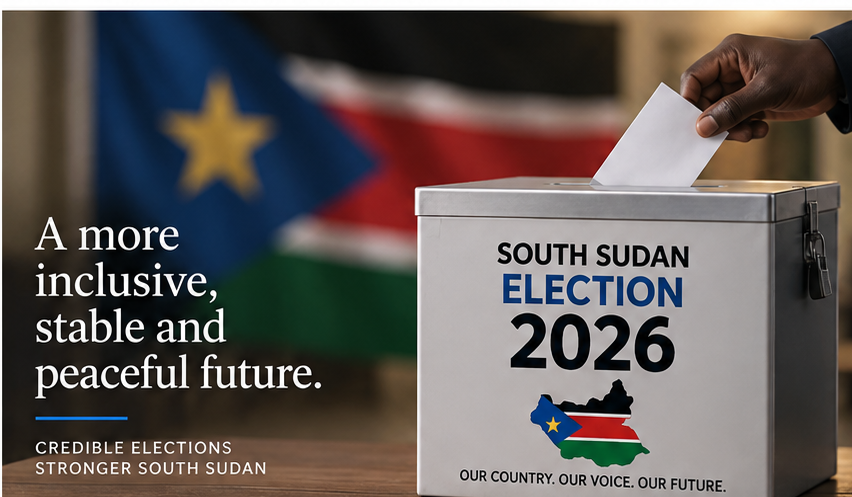
- Called for inclusive dialogue to clarify a “consensual pathway” to elections in December 2026.
- Directed the IGAD Ministerial Sub-Committee on South Sudan to intensify engagement with the government and other stakeholders and report back.
- Called for sustainable and predictable funding for RJMEC and CTSAMVM through the remainder of the Transitional Period.
Intervention comes amid electoral-law debate
IGAD's position arrives as South Sudan's Parliament considers proposed amendments to the National Elections Act. Reporting on the bill says it proposes that the incumbent President continue exercising constitutional powers during the election period while the First Vice President and other Vice Presidents would leave office three months before polling.
The proposal remains a bill and has not become law. It has been referred for further parliamentary scrutiny.
The reported proposal raises an unresolved institutional question because the current presidency forms part of the power-sharing architecture associated with the transitional arrangements. IGAD's communiqué does not expressly rule on the proposed legislation and does not state that it violates the peace agreement.
What does “anchored” mean?
The wording places renewed regional emphasis on the relationship between South Sudan's electoral process and the peace framework. Electoral preparations are increasingly moving through domestic institutions, including Parliament and the National Elections Commission, while IGAD continues to describe the 2018 agreement as the framework underpinning the transition toward elections.
The Council did not publish a deadline for reaching political consensus, specify conditions for judging whether the December election is viable, or set out a new election-roadmap text. Its intervention is therefore best understood as regional diplomatic pressure for an agreed pathway, rather than a new binding electoral settlement.
Peace-monitoring institutions remain in focus
IGAD also called for sustainable and predictable financing for the Reconstituted Joint Monitoring and Evaluation Commission (RJMEC) and the Ceasefire and Transitional Security Arrangements Monitoring and Verification Mechanism (CTSAMVM) throughout the remainder of the Transitional Period.
Both institutions form part of the architecture established to monitor implementation of the peace agreement and transitional security arrangements. The funding request indicates that IGAD continues to regard that monitoring architecture as relevant as South Sudan approaches elections.
Dialogue approaching
The regional intervention comes shortly before the rescheduled inter-party political dialogue in Juba. The government postponed that meeting from 17 September to 24 September. Questions remain about participation, outstanding transitional obligations and the political arrangements governing the period immediately before the election.
IGAD has not specified which parties or competing political structures its Ministerial Sub-Committee will engage. That question may be important given continuing divisions within the SPLM-IO following the detention and prosecution of First Vice President Riek Machar.
The unanswered legal question
South Sudan Press is not making a determination on that question. It requires examination of the final amendment text, the Transitional Constitution, the 2018 peace agreement and the legal mechanisms through which transitional arrangements can be modified.
For now, two developments can be stated separately: Parliament is considering changes to South Sudan's electoral legislation, and IGAD says the country's elections remain anchored in the agreement that created the transition. How those processes are reconciled could become one of the defining institutional questions on South Sudan's road to December.
Editorial status
IGAD COMMUNIQUÉ · DECEMBER ELECTION REMAINS SCHEDULED · INCLUSIVE DIALOGUE URGED · ELECTORAL AMENDMENT REMAINS A BILL