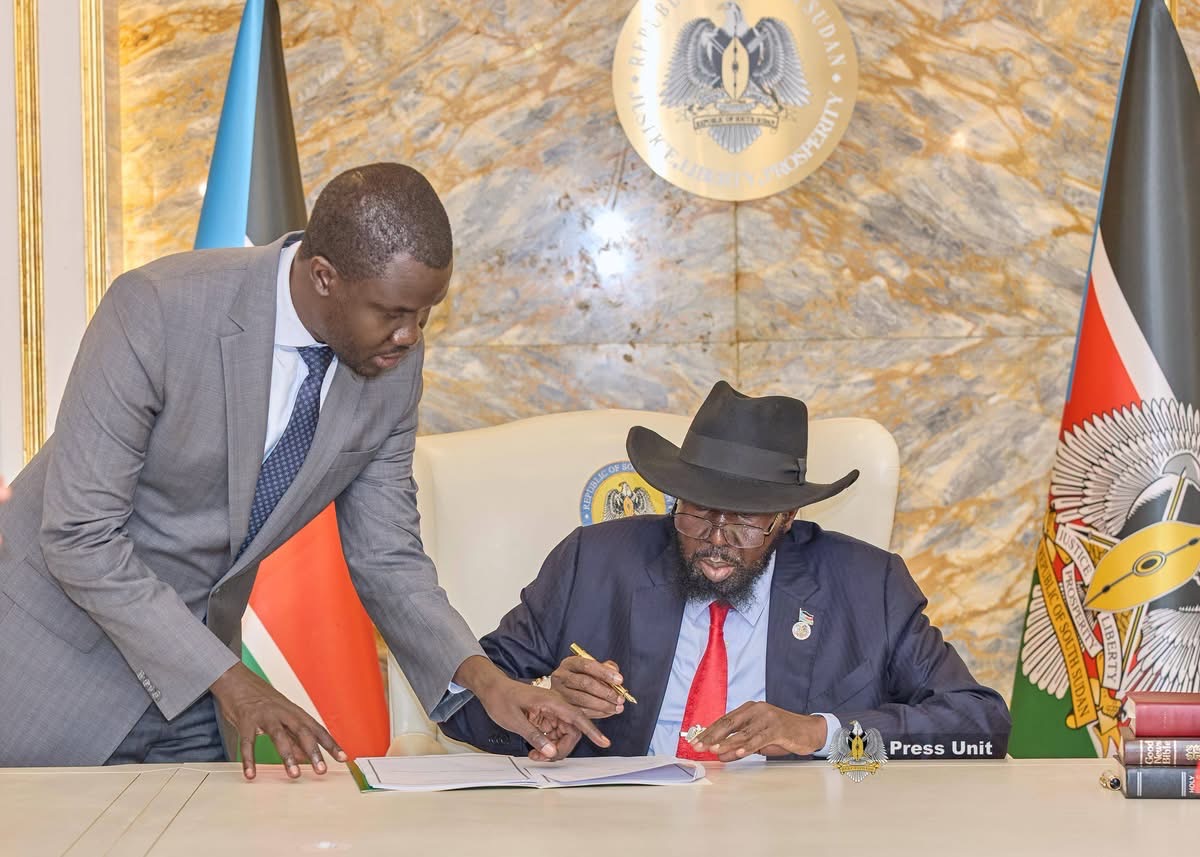
JUBA — President Salva Kiir has dissolved South Sudan’s transitional unity government and installed a caretaker administration, removing the country’s vice presidents, cabinet and national legislature while also dissolving state governments ahead of elections scheduled for 22 December.
The Republican Order was announced on state broadcaster SSBC on the evening of 22 September, one day after Kiir assented to amendments to the National Elections Act. SSBC reported the dissolution as part of the transition toward the electoral period.
According to the publicly announced order and reporting by Radio Tamazuj, First Vice President Riek Machar and the other four vice presidents were removed with immediate effect. National ministers and deputy ministers were relieved, while the Transitional National Legislative Assembly and Council of States were dissolved.
States and administrative areas also dissolved
The order also dissolved governments and legislatures across South Sudan’s 10 states and the administrations and councils of Abyei, Pibor and Ruweng. County commissioners were removed from political and policy functions pending interim arrangements, while essential administrative functions are expected to continue.
The judiciary, civil service, independent commissions and organised forces were not dissolved and are reported to remain operational.
Who has been appointed?Tap to view selected caretaker appointments
Selected caretaker appointments
| Office | Reported appointee |
|---|---|
| Finance | Athian Diing Athian |
| Petroleum | Awou Daniel Chiang |
| Defence | Ayor Akuoch Anok |
| Interior | Rizik Zakariah Hassan |
| Justice | Wek Mamer Kuol |
| Foreign Affairs | Cecilia Adut Manyok |
| Information and ICT | Ateny Wek Ateny |
| Peacebuilding | Stephen Par Kuol |
| Upper Nile | James Koang Chuol |
| Unity | Joseph Nguen Monytuil |
| Jonglei | Moses Majok Gatluak |
Limits on caretaker authority
The caretaker arrangements reportedly restrict officials from entering major long-term agreements, incurring substantial public debt, granting strategic concessions or disposing of public assets without presidential authorisation and compliance with applicable law. Caretaker officials are also directed to maintain political neutrality in the use of public institutions and resources.
Those restrictions will be important because the national legislature has been dissolved, removing the previous parliamentary structure during the remaining period before the scheduled election.
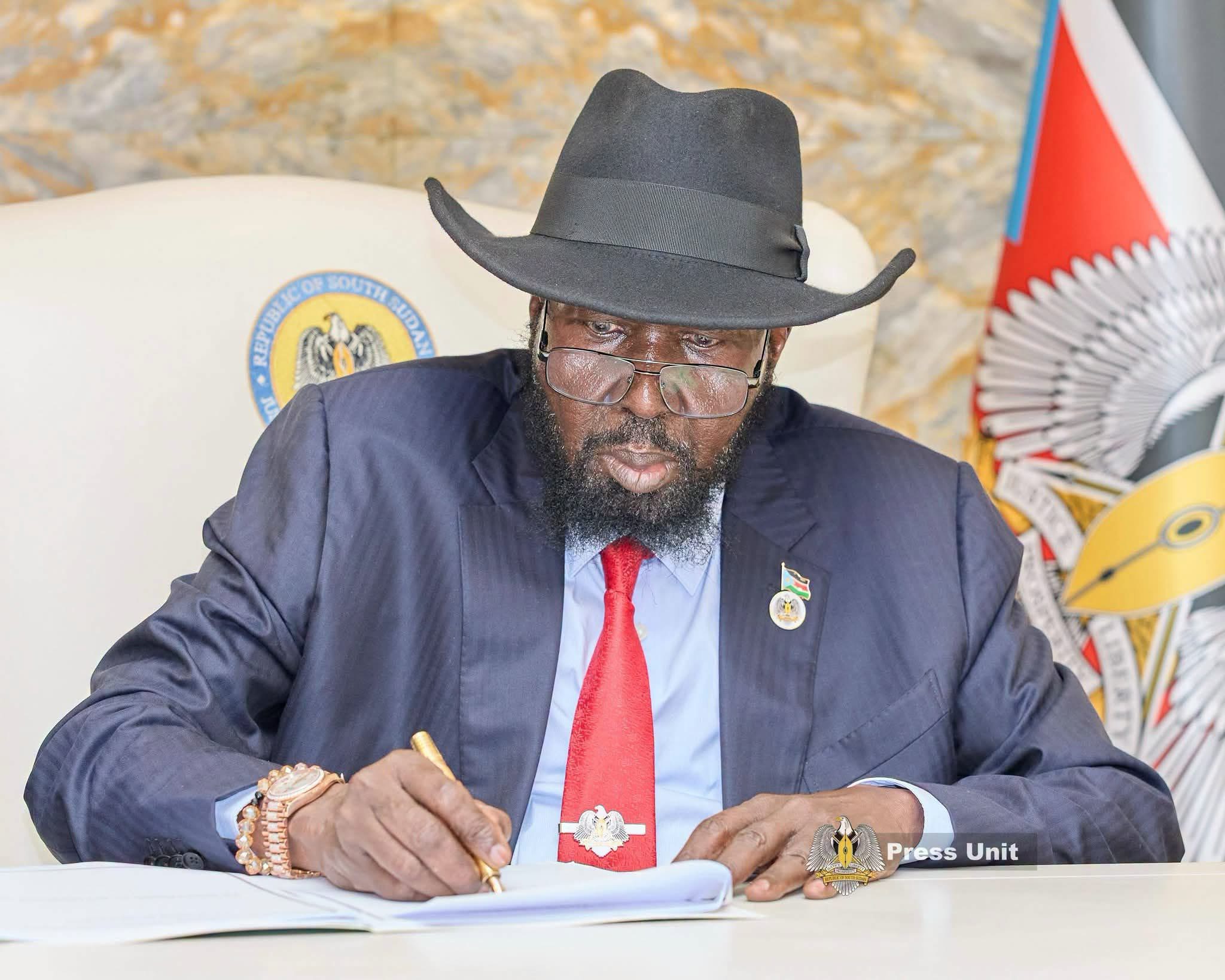
President Salva Kiir signing official documents in Juba. Context image. Photo: Office of the President/Press Unit.
Political and legal questions remain
The dissolution follows amendments to the electoral framework enacted on 21 September. Opposition parties had already objected to unilateral changes affecting the peace-agreement transition. Those objections are political and legal claims; SSP has not identified a court ruling determining the validity of the new caretaker arrangements.
Kiir remains President during the electoral period until an elected successor assumes office under the reported arrangements.
The authenticated written Republican Order and complete implementing instruments remain important primary documents. SSP is seeking them to verify the precise legal basis, commencement provisions, full appointment list and limits placed on caretaker officials.
Three months to the scheduled election
The restructuring comes three months before the election currently scheduled for 22 December 2026. It raises immediate questions about public spending without a sitting Parliament, electoral neutrality, the authority of caretaker officials, the status of the planned 24 September inter-party dialogue and what would happen to the caretaker arrangement if voting were delayed.
The European Union has separately raised concerns about the scope of caretaker authority and the compressed election timetable. Those concerns do not determine the legality of the order, but add to scrutiny of whether electoral institutions, financing and political conditions can be prepared within the remaining period.
What SSP is watching
South Sudan Press is seeking the signed Republican Order and related instruments, verifying appointments and handovers across ministries and states, and tracking responses from removed officeholders, peace-agreement parties, RJMEC, IGAD, the African Union and constitutional-law specialists.