
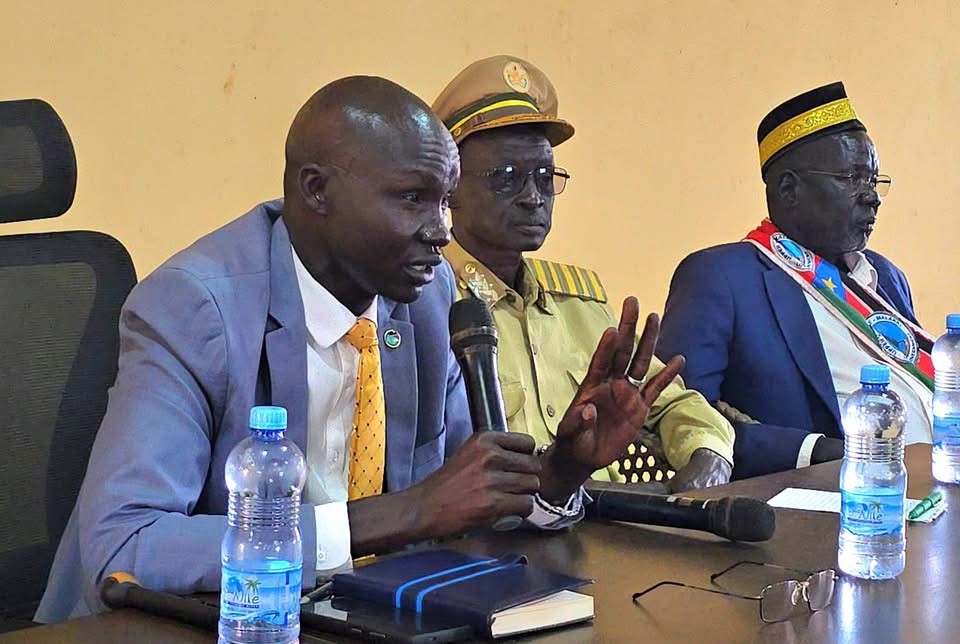
Melut County Commissioner Chok Zain Arop has announced plans to establish a committee to investigate delays in disbursing the statutory three-percent share of net petroleum revenue allocated to communities in South Sudan’s oil-producing areas.
The decision followed a consultation with community leaders in Paloch Payam on 14 September, according to a statement from the commissioner’s office reported by Eye Radio. The meeting discussed local development challenges as well as delays affecting implementation and disbursement of the community oil-revenue share.
Arop said a committee comprising five or seven representatives from traditional authorities will investigate the reasons for the delay, follow up with relevant authorities and submit recommendations on how the process should move forward.
What is not established: The amount outstanding, the period covered, where the payment process stalled, or whether any money was diverted or misappropriated.
What does the 3% mean?
South Sudan’s legal framework allocates three percent of net petroleum revenue to communities in petroleum-producing states, alongside a two-percent allocation to the producing states. The community share is intended to support local development.
Eye Radio reports that the funds are intended for priorities including schools, hospitals, roads and clean water. Melut forms part of the oil-producing Melut Basin, including the Paloch oilfield.
Oil production → net petroleum revenue → 3% community entitlement → national allocation/transfer → community structures → projects → public reporting & audit
The missing numbers
The inquiry begins without the most important figure in public view: how much is owed? No published material reviewed for this report establishes Melut’s current outstanding entitlement, the production years involved, the date or amount of the last transfer, or the balance that should have reached community structures.
A delay can occur at several points — calculation, authorisation, national transfer, receipt at subnational level or distribution to projects. Establishing where the process stopped is necessary before responsibility can fairly be assigned.
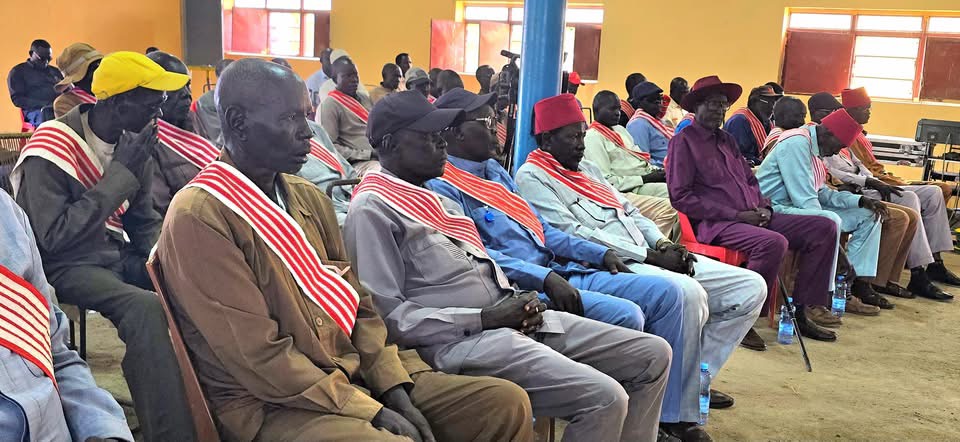
Community and traditional-authority representatives attend the Melut consultation. Authorities say a committee drawn from traditional leaders will investigate delays affecting the statutory petroleum-revenue share for oil-producing communities. Photo: Supplied.
A longer transparency problem
The Melut inquiry comes against a documented history of weaknesses in South Sudan’s petroleum-revenue sharing system. A 2018 Sudd Institute study concluded that the three-percent community share had not been properly allocated and transferred and that key information about allocations, transfers and spending was not consistently disclosed.
A recent World Bank public-finance review similarly found that allocations to oil-producing states and communities had failed to comply with constitutional and legal requirements. That history makes publication of current ledgers, transfer records and project accounts particularly important.
What the committee needs to establish
A credible inquiry will need records from more than Melut County. It should reconcile petroleum production and net-revenue calculations with national authorisations, bank transfers, receipts by community structures and expenditure on named development projects.
What is Melut’s outstanding amount? Which production periods are affected? When was the last payment? How was the entitlement calculated? Which account receives the community share? Who has signing authority? Will bank transfers, contracts and beneficiary projects be published? Will the Finance and Petroleum ministries provide the underlying records? Who will sit on the new committee, and when must it report?
Why it matters in Paloch
For communities living around a major oil-producing area, the issue is not simply an accounting dispute. Petroleum-revenue sharing was designed to translate extraction into visible local benefit. Where communities continue to identify needs in basic services and infrastructure, unexplained delays undermine confidence that the statutory system is working as intended.
Until the records are produced, the responsible conclusion is limited but important: the delay is acknowledged and an inquiry has been announced; the cause and financial responsibility remain to be established.