SATURDAY, 31 OCTOBER 2026 · NEWS
SSRA Sets Maximum Tax-Stamp Charges for Tobacco and Alcohol
A 29 October circular distinguishes imported products from local production and bars unauthorised overcharging.
JUBA — The South Sudan Revenue Authority has revised maximum digital tax-stamp charges for tobacco and alcoholic beverages, Eye Radio reports, citing a circular signed by Commissioner General Rizig Dominic Samuel on 29 October.
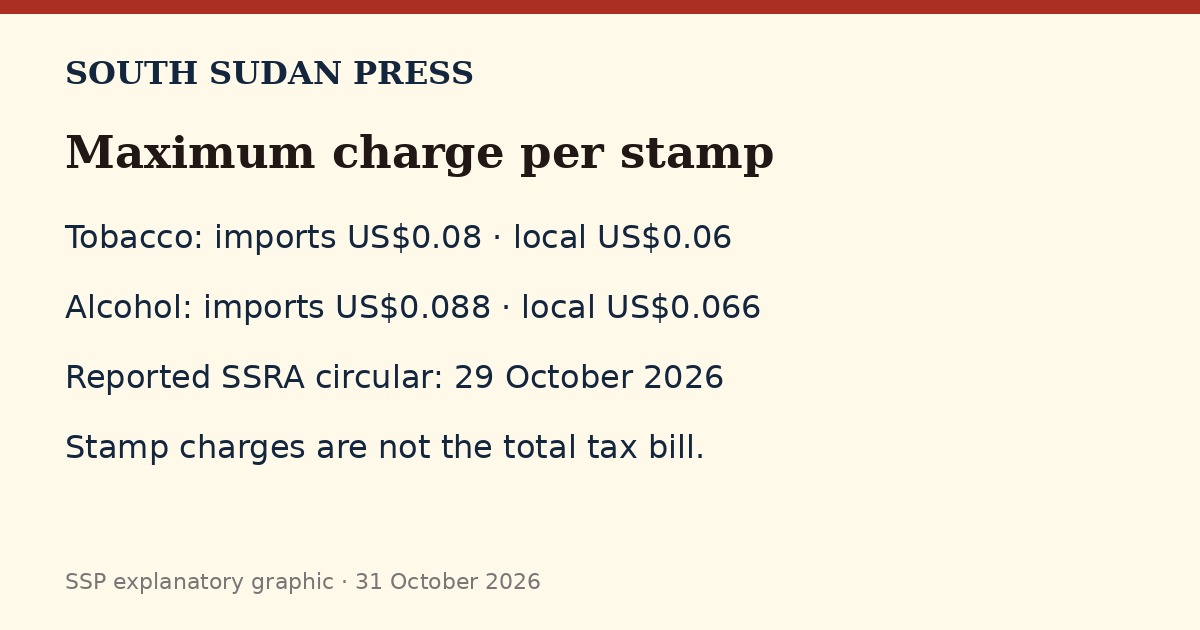
The reported ceilings are US$0.08 per stamp for imported tobacco and US$0.06 for locally made tobacco. For alcoholic beverages, they are US$0.088 for imports and US$0.066 for local production. The circular reportedly takes effect on signature and prohibits charging above the ceilings without written authorisation.
Reported stamp-charge ceilings
| Product | Imported | Locally made |
|---|---|---|
| Tobacco | US$0.08 | US$0.06 |
| Alcohol | US$0.088 | US$0.066 |
Per stamp, not a percentage tax or complete tax schedule. Source: Eye Radio’s account of the SSRA circular.
These are per-stamp charges. They should not be read as percentage tax rates or as a complete statement of the duties payable on a consignment. Other applicable obligations need to be checked against the current official rules and the product concerned.
For traders, an accessible schedule would make it easier to compare an invoice with the authorised charge. It would also help distinguish the stamp cost from separate taxes and administrative costs, reducing confusion at the point of payment.
The report does not establish what businesses were previously paying or how prices will change. SSP has no independent invoice sample or retail survey for this edition, so it does not claim a measured reduction in operating costs or a particular increase in consumer prices.
Publication of the full circular, an explanation of billing and an official complaints route would help turn the revised ceilings into a checkable system. The immediate reporting task is to verify whether the same schedule is applied consistently, rather than assume that announcing it has resolved disputes.
Sources and reporting basis
Prepared from available material for this edition. Follow-up questions identify reporting priorities; they have not been sent as requests by SSP.