TUESDAY · 2 NOVEMBER 2026 · ANALYSIS
IMF Repayments: Separate the Debt Stock, the Schedule and Actual Payments
Official records show obligations in SDRs. They do not, by themselves, establish today’s payment status or total public debt.
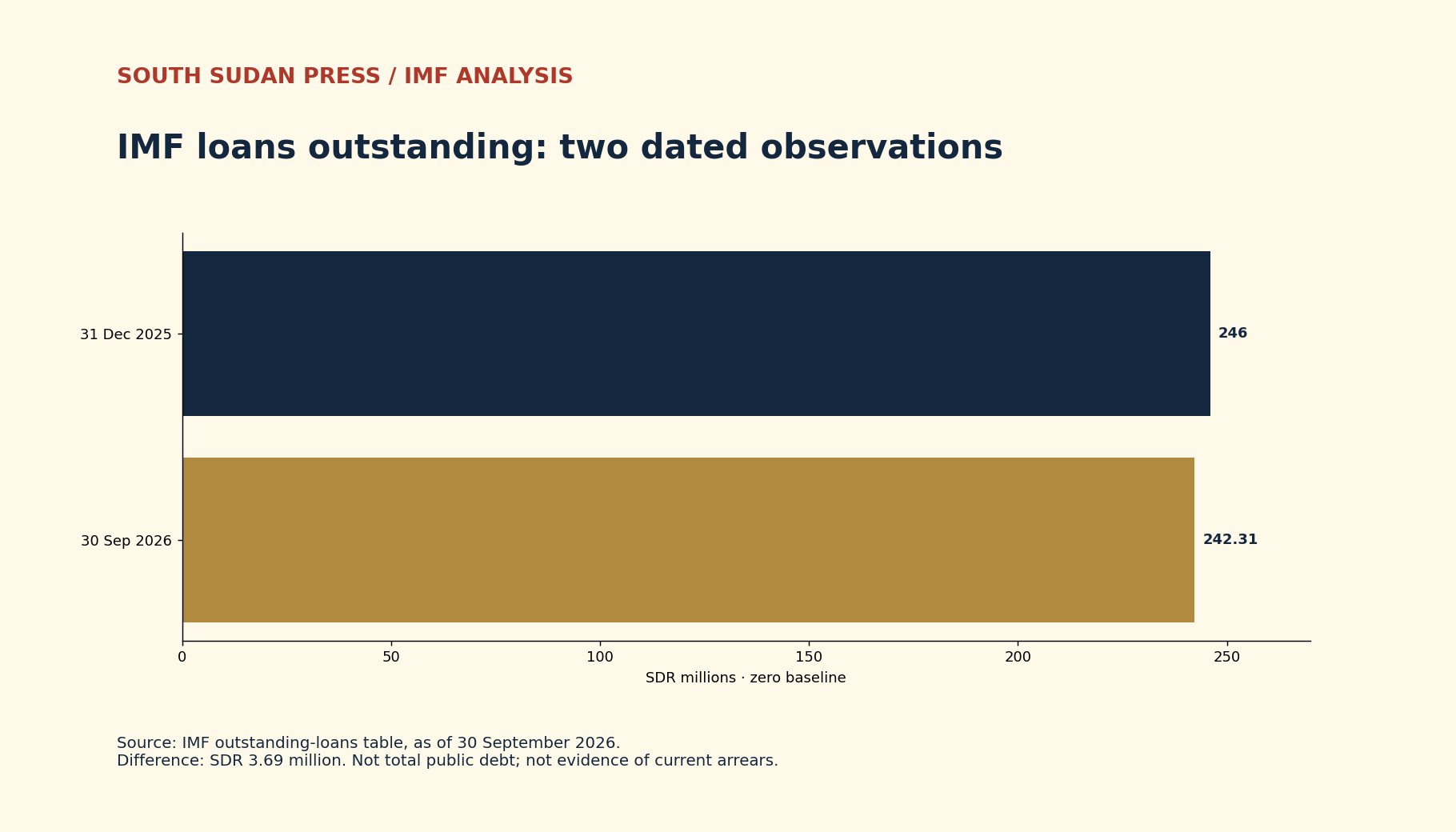
South Sudan’s IMF obligations need to be reported through three different records: what remains outstanding, what was scheduled to fall due and what was actually paid. Confusing those records can produce a false claim of default or an exaggerated claim that the debt has been cleared.
The IMF’s outstanding-loans table records SDR 242.31 million at 30 September 2026, compared with SDR 246 million at the end of 2025. The difference is SDR 3.69 million. The accompanying chart shows those two dated stocks only; it is not a chart of all South Sudanese debt or a complete payment ledger.
An accessible projected-payments table, prepared as of 31 October 2025, lists a Rapid Credit Facility principal repayment of SDR 3.69 million on 13 November 2026 and another of SDR 12.3 million on 1 October. It also includes SDR-related charges. Because it is an older projection, this article does not treat every listed amount as a current invoice, confirm that a payment was made or assert that one is overdue.
The accounting distinction matters. A lower outstanding loan balance is a dated stock observation. A repayment schedule is a timetable. Settlement needs a transaction record or confirmation from the responsible institution. Differences in reporting dates should be resolved before drawing conclusions about missed obligations.
SDR is the IMF’s accounting unit; the figures are not US dollars or South Sudanese pounds. Converting them requires a dated exchange rate. This edition leaves the amounts in SDRs rather than create a misleading currency comparison. Net SDR charges should also not be labelled automatically as interest on the same loan principal.
The public-policy question is how external obligations are budgeted alongside salaries, health, water and education. A transparent debt-service statement would identify the amount falling due, the currency source, the date and amount settled, any unpaid balance and the effect on essential spending. These are proposed disclosure tests, not an allegation that all debt service is inappropriate.
The Finance Ministry and central bank should also explain how IMF obligations fit within the wider debt portfolio. IMF exposure alone cannot describe liabilities to commercial, bilateral or other multilateral creditors. Nor does this analysis establish eligibility for a new IMF programme, a restructuring arrangement or debt relief.
The immediate editorial conclusion is precise: the official September stock is verifiable; the older November repayment projection is useful context; present settlement status still requires confirmation. Readers deserve that separation before any headline announces either financial success or default.
Sources and verification
- IMF · outstanding purchases and loans, 30 September 2026
- IMF · 2026 projected payments as of 31 October 2025
Prepared for 3 November 2026. Allegations and reporting gaps are identified in the text. No new SSP interview or field visit is claimed. Follow-up questions have not been sent as requests.
Tuesday front page → · Jobs & Careers → · Election information →