OPINION · ARCHITECTURE AND NATIONAL MEMORY
Beyond the Place of Burial: Reimagining General Joseph Lagu’s Final Resting Place as a National Landscape of Memory
By Daniel Lagu Marchello
A South Sudanese Architect, Academic and a researcher
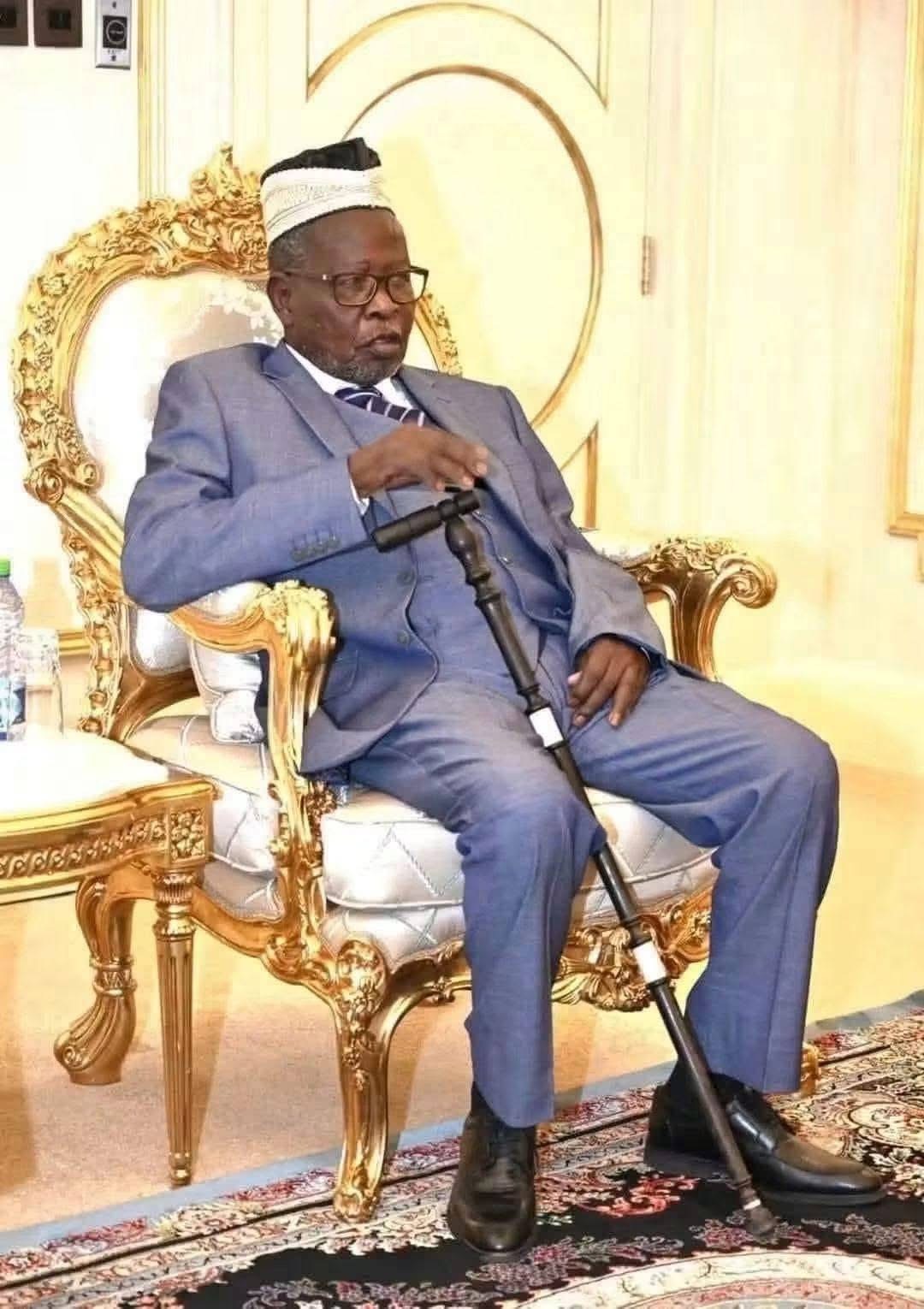
The ongoing debate surrounding where the late great Mukungu, General Joseph Lagu, should be laid to rest is one that deserves a much deeper and more considered national conversation. It is a question that extends beyond the physical location of a grave; it touches on our ancestral values, cultural identity, liberation history, collective memory and the responsibility of a nation to preserve and transmit its historical legacy to future generations.
The different positions emerging from this debate are neither insignificant nor necessarily contradictory. Rather, each represents an important dimension of who General Lagu was and what he represents in the historical consciousness of South Sudan.
On one hand, there is the compelling argument for an ancestral home burial in Nimule/Moli. Within many African cultural and spiritual traditions, particularly those of our own communities, the burial of an elder within ancestral land is far more than the physical interment of the deceased. It is an expression of belonging, continuity, lineage, spiritual connection and the enduring relationship between people and their land. The home becomes a custodian of memory, while burial rites become an important passage through which cultural values, ancestral relationships and collective identity are reaffirmed. For an elder of General Lagu's stature, this dimension carries profound significance.
On the other hand, Torit occupies an equally important place in the historical narrative. As a significant point in the genesis and development of the liberation struggle, it represents the historical geography of resistance, sacrifice and the struggle for self-determination. It is a place where history is not simply remembered through written accounts but can be experienced through the landscape itself. In this regard, Torit has the potential to become a living site of historical consciousness, preserving the memory of the liberation movement and connecting present and future generations to the origins, struggles and sacrifices that shaped our nation.
Then comes Juba, the national capital, whose symbolism carries another profound dimension. As the political and institutional heart of South Sudan, Juba represents the culmination of a long historical journey towards nationhood. The resting place of a national figure of General Lagu's stature within the capital would carry a powerful national statement: recognising his contribution not merely as an individual or regional historical figure, but as one of the architects of our collective journey towards freedom and statehood. It would also position his legacy within the national consciousness, where it can remain accessible, visible and relevant to future generations.
International precedents, including the memorial traditions associated with Nelson Mandela, Mwalimu Julius Nyerere, Jomo Kenyatta and other distinguished African leaders, have understandably featured in this conversation. These examples offer valuable lessons on how nations commemorate their historical figures. However, while such precedents are worth examining, our ultimate reference point must be our own historical, cultural and geographical context. Our liberation struggle, ancestral traditions, cultural diversity, collective memory and unique journey towards nationhood must inform the decision. We should not simply borrow memorial models; we should develop one that speaks authentically to South Sudan's own identity and historical experience.
A BUILT ENVIRONMENT PERSPECTIVE: WHY THE THREE DIRECTIONS NEED NOT TO BE IN COMPETITION
As an architect and built environment professional, I see an opportunity to approach this debate beyond the conventional question of choosing one geographical location over another. What if the three dimensions could be harmonised into a single, coherent national memorial vision?
This would require a comprehensive programme of spatial planning, architectural design, landscape architecture, cultural interpretation and heritage conservation. It would mean recognising that a memorial is not simply a monument, mausoleum or burial chamber. It is a carefully constructed environment in which architecture, landscape, movement, symbolism, rituals and historical narratives come together to communicate a nation's story.
One of the most remarkable historical precedents is the Giza pyramid complex in ancient Egypt. Beyond their monumental architectural presence, the pyramids and their surrounding funerary landscapes were conceived within an elaborate cultural and spiritual understanding of death, transition and the afterlife. The Nile, ceremonial processions, funerary temples, causeways and burial chambers formed interconnected elements of a larger ritual and architectural journey. The significance of this precedent lies not in replicating its architectural form, but in understanding how a built environment can translate beliefs, rituals and collective values into an enduring spatial experience.
Across different civilisations, mausoleums, memorial parks, monuments and places of national remembrance have similarly demonstrated how architecture can transform the memory of an individual into a lasting public and national institution.
In the South Sudanese context, should the Dr John Garang Mausoleum site in Juba emerge as the chosen location for General Lagu's final resting place, I believe this presents an extraordinary opportunity to rethink and reimagine the site. This would require careful consideration of its identity, symbolism and national significance, potentially including its renaming and transformation into a broader national memorial landscape.
The intention should be to create more than an additional burial space. It should be to establish a magnificent and intellectually grounded narrative of remembrance, one that brings together the different chapters of General Lagu's life and the historical journey he represents.
Imagine a memorial landscape in which the cultural rites and traditions of the Ma'di people are thoughtfully incorporated into the spatial and ceremonial design; where the history of the Anyanya movement is interpreted through a sequence of memorial spaces, historical installations, artefacts, monuments and landscape elements; and where the visitor experiences a carefully choreographed journey through the historical milestones, sacrifices and achievements that contributed to the making of South Sudan.
Such a place could accommodate ceremonial spaces, contemplative gardens, historical galleries, archival and research facilities, symbolic landscapes, public gathering spaces and architectural installations that narrate the liberation struggle. Every spatial element would have a purpose, every monument would communicate a chapter of history, and every movement through the landscape would contribute to an overarching story.
Importantly, this should not become a static monument dedicated exclusively to the past. It should be a living institution of national memory, education, cultural identity and public engagement. A place where future generations can encounter history, understand the sacrifices behind their nationhood and reflect on the responsibilities of shaping its future.
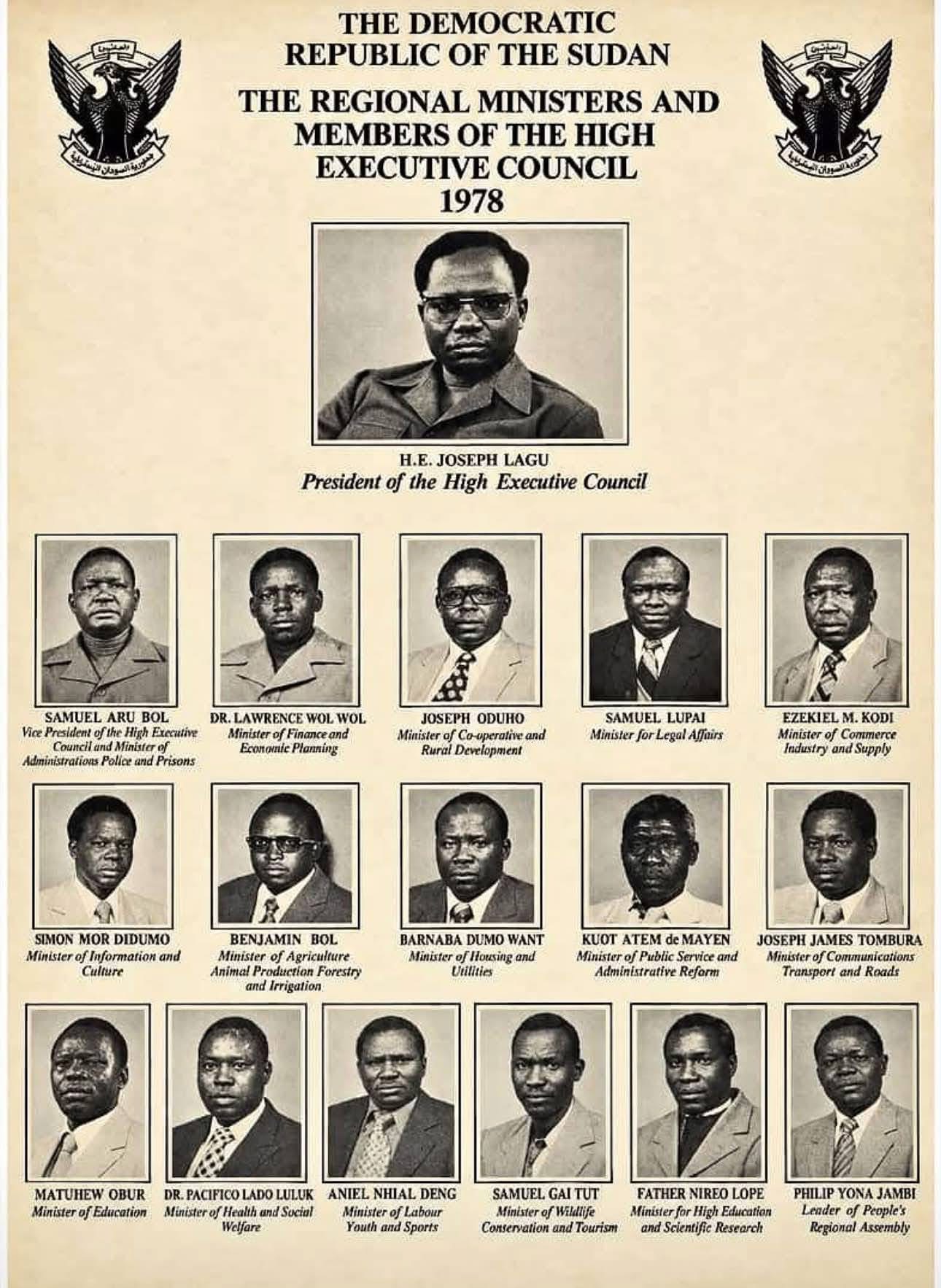
A NATIONAL NETWORK OF MEMORY: CONNECTING NIMULE/MOLI, TORIT AND JUBA
The most compelling proposition, however, is that the national memorial vision should not end in Juba. The three geographical locations can be connected through a broader framework of distributed national remembrance.
Nimule/Moli could be recognised and developed as an ancestral heritage and cultural memory site, preserving the connection between General Lagu, his community, ancestral land and the cultural traditions surrounding his life and final rites.
Torit could be developed as a significant liberation heritage and historical interpretation site, documenting the origins, milestones, personalities and sacrifices of the Anyanya movement and the broader struggle for self-determination.
Juba could serve as the principal national memorial and ceremonial centre, bringing these narratives together within a shared national landscape of remembrance.
These locations would not compete for historical importance. Instead, they would complement one another, each preserving a distinct but interconnected dimension of the national story.
Furthermore, General Lagu's name and legacy deserve recognition beyond the memorial landscape itself. Deliberate consideration should be given to commemorating him through the naming of appropriate national institutions, military and public service establishments, educational facilities, streets and other significant civic infrastructure. These recognitions should be guided by historical merit and national significance rather than token gestures.
BEYOND BURIAL: AN OPPORTUNITY TO DEFINE HOW SOUTH SUDAN REMEMBERS ITS HISTORY
Ultimately, the question of where General Joseph Lagu should be laid to rest presents South Sudan with an opportunity to do something much greater than settle a burial-location debate. It offers us a moment to reflect on how we document our history, preserve our cultural heritage, honour our national icons and translate collective memory into enduring physical environments.
Nations are not defined only by their political institutions, territorial boundaries or economic aspirations. They are also defined by the places, monuments, landscapes and collective narratives through which they remember their past and communicate their identity to future generations.
As architects, planners, historians, cultural custodians and citizens, we must therefore recognise that the making of places of remembrance is itself an important act of nation-building.
Perhaps the most fitting tribute to Mukungu is not simply to decide where his remains should rest, but to create a place, and indeed a connected landscape of places, where his legacy, the history of the liberation struggle and the story of South Sudan can continue to live.
A legacy of this magnitude deserves more than a grave. It deserves a national narrative, an enduring architectural expression and a place within the collective memory of generations yet unborn.
The central architectural proposition;
One Legacy. Three Places. One National Memory.
Ancestral identity, cultural continuity and spiritual heritage.
A Connected National Memorial Landscape
A distributed heritage and memorial system connecting ancestral, historical and national spaces through architecture, landscape, cultural interpretation and collective memory.
My recommendation on the public positioning
Three particularly powerful ideas should define the conversation:
1. Move beyond the politics of location. Reframe the discussion from which place deserves General Lagu to how the nation can adequately honour all the dimensions of his legacy.
2. Introduce memorial architecture as a national development agenda. This is an opportunity to establish a South Sudanese approach to memorialisation, heritage conservation and the architectural documentation of liberation history.
3. Make the proposal intergenerational. The objective should not only be to honour a departed national icon but to create an educational, cultural and civic legacy that will remain meaningful for generations.
One important historical and architectural distinction should also be preserved: the Giza example is valuable as a precedent for integrated funerary landscapes and ceremonial journeys, rather than as evidence that all three proposed South Sudanese locations must literally be combined into one burial site.
Opinion submitted by the author. Views are his own. The Giza comparison concerns integrated funerary landscapes; the proposal does not require three physical burial sites.
About the author →ADVERTISEMENT · CYBERPASS ACADEMY

Online learning planned from early 2027. Visit www.CyberPass.co for announcements. Course dates, fees and enrolment details to be announced.
ADVERTISEMENT · WEB SERVICES & DOMAIN NAMES

Build a home online for your business, school, NGO or charity. Ask about hosting, website development and selected short four-letter domain names, including names beginning or ending with SS.
Short. Memorable. Easy to say on radio. Each name is subject to availability and individual pricing.