SUNDAY · 1 NOVEMBER 2026 · ANALYSIS
Inside SPLM: Lam Both’s Exclusion Tests Who Controls Representation
His account raises questions about party rules and appeals. It does not establish why colleagues opposed him or prove a parliamentary primary defeat.
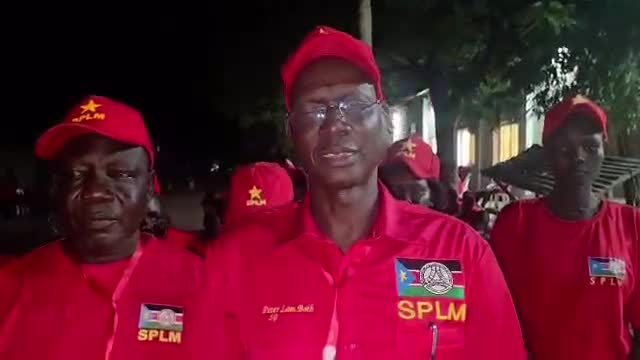
Peter Lam Both’s complaint is politically significant because it comes from a former SPLM secretary-general who says a local choice was blocked higher up the organisation. But the strongest analysis begins by naming the decision correctly: the material concerns representation at the party’s National Convention, rather than a confirmed defeat in a parliamentary primary.
In the publisher-supplied recording and in Eye Radio’s subsequent account, Lam Both describes exclusion from the delegate process. The broadcaster reports his allegation that Ulang members selected him but senior officials and a high-level committee refused recognition. It also records his account of failed compromise arrangements and his intention to take the matter to party chairman Salva Kiir.
These details establish the nature of his grievance. They do not establish the committee’s written reasons, the applicable selection rule or the motives of the officials he accuses. A statement that someone was targeted personally is an allegation requiring a response and supporting records. A factual explanation of why he was left out must await that evidence.
What can already be analysed is the institutional tension. If local members choose a representative but a central body has power to reject that choice, confidence depends on knowing the limits of each authority. Was the local vote sufficient, or did the rules require another approval? Did a quota apply? Could a delegate transfer a seat? Which body can hear an appeal? Those questions have answers in rules and records, not in speculation about private rivalries.
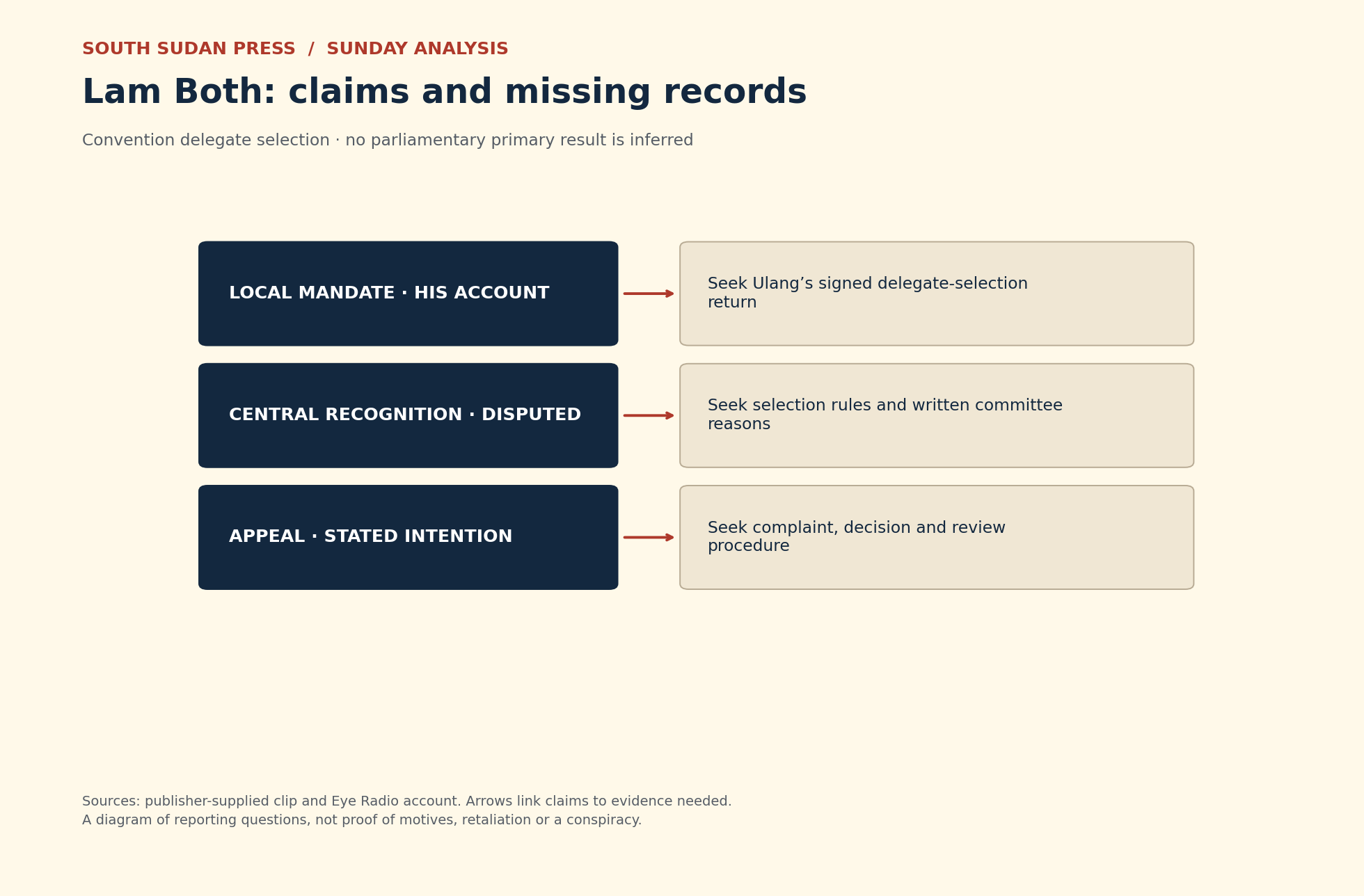
The accompanying diagram separates three stages: Lam Both’s reported local mandate, the disputed central recognition, and an appeal that he says he intends to pursue. It is a map of competing claims and missing documentation, not a proven chain of conspiracy. No vote totals, probabilities of retaliation or measures of factional strength have been invented.
His prominence makes the dispute a test with consequences beyond one politician. Members with less influence may find it harder to obtain reasons or challenge a decision. A transparent process should be capable of explaining both acceptance and rejection consistently, regardless of the individual’s rank. That is an institutional principle, not evidence that every current decision is arbitrary.
The decisive documents would be the delegate-selection rules, Ulang’s signed return, the official delegate list, the committee’s decision and any appeal response. Publishing them would let readers distinguish an irregular exclusion from a lawful application of rules that an aspirant dislikes. In their absence, neither explanation can be treated as settled.
Lam Both’s complaint also illustrates the limit of personal escalation as a remedy. An intervention by the chairman could settle his individual case while leaving future members uncertain about their rights. The wider democratic test is whether the same written rules and review process apply to everyone. That is the question the party can answer through disclosure, irrespective of how this particular dispute ends.
The supplied recording
Recording previously supplied to SSP. Original recording date and location unverified; the speaker’s allegations are not independent findings.
Sources and evidence
- Eye Radio · Lam Both’s allegations and reported appeal
- Publisher-supplied recording · frame used with original date and location unverified
Sources reviewed for the Sunday edition. Dates in the text refer to the underlying reports or observations. Proposed follow-ups are reporting priorities, not claims that requests have been sent.