THURSDAY · 5 NOVEMBER 2026 · ANALYSIS · SPLM
SPLM Readiness Will Be Tested by Rules Members Can Trust
Analysis: organising congresses is one task; resolving disputes and protecting equal participation are another.
The SPLM’s public account of its 4 November leadership briefing presents reorganisation and internal elections as evidence of renewal. The party says its leaders reviewed progress and that Salva Kiir welcomed their work. That establishes the leadership’s position; it is not an independent assessment of whether every local selection has been fair.
An organisation can move quickly while leaving its members uncertain about the rules. Political readiness needs more than completed meetings. Members must be able to identify who is eligible, who selects delegates, which body decides a dispute and what happens if a local result is contested. A process that cannot explain those steps risks carrying its disagreements into the next stage.
The Torit episode illustrates a practical weakness. Party assurances about access to supporters sit alongside a municipal requirement for authorisation. Even if each institution believes it has a different purpose, the participant faces one immediate problem: whether a meeting can proceed. Readiness should be judged by clear, usable instructions rather than the number of officials promising protection.
A credible internal process also separates party administration from the power of public office. The useful evidence is a common rule applied to incumbents and challengers, accompanied by a record showing how exceptions were handled. This analysis does not establish that any particular official has breached a rule; it identifies the information needed to evaluate such a claim.
Disputes should be treated as an institutional test rather than proof that a party is necessarily disintegrating. A transparent appeal can correct a mistake and preserve confidence. Conversely, an unexplained decision can damage trust even where the eventual result is defensible. Publishing reasons gives members something concrete to accept, challenge or learn from.
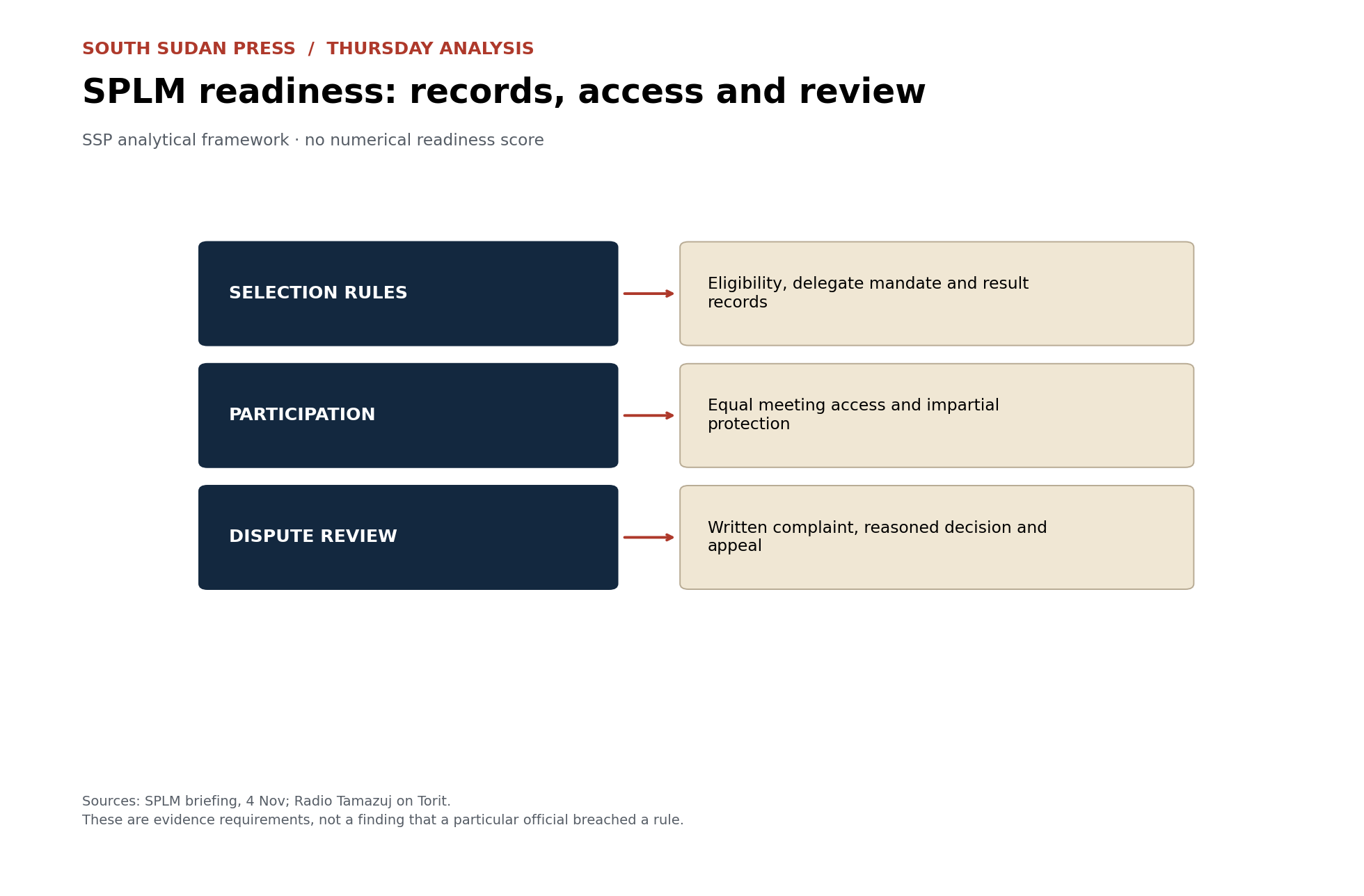
The most useful readiness checklist has four parts: accessible selection rules, traceable delegate and result records, equal opportunity to organise, and a functioning review mechanism. Each needs documentary support. Attendance figures and speeches can supplement that record, but they cannot replace it. No numerical party-readiness score is warranted by the material reviewed for this edition.
For the national contest, the question is whether internal disagreements are resolved through procedures members regard as legitimate. A governing party benefits when losing aspirants can see how a decision was reached and what avenue remains available. Such confidence comes from consistent practice across locations, not from a declaration that the process is democratic.
The conclusion is conditional: the SPLM’s organisational activity is visible in its own public reporting, while the quality of member consent requires further evidence. The next useful disclosures are rules, signed results and appeal decisions. Those records would allow readers to distinguish an efficient mobilisation exercise from a nomination process that participants can independently assess.
Sources and verification
- SPLM, 4 November: official account of leadership briefing
- Radio Tamazuj, 4 November: competing Torit instructions
Prepared for 5 November 2026 from the linked public record. No original SSP interview, field visit, request for comment or unpublished document is claimed. Dated assessments are not presented as live findings.
ADVERTISEMENT · CYBERPASS.CO

Learn AI and coding skills
Explore CyberPass Academy’s digital-skills offering.
Publisher-supplied advertisement. SSP and CyberPass share a founder. Course availability, fees and enrolment terms should be confirmed with CyberPass. No EAC accreditation is implied.Thursday front page → · Jobs & Careers → · Election information →