Instability and Uncertainty in Upper Nile State
Peace will remain fragile until public institutions become stronger, more trusted and more durable than the political factions competing to control them.
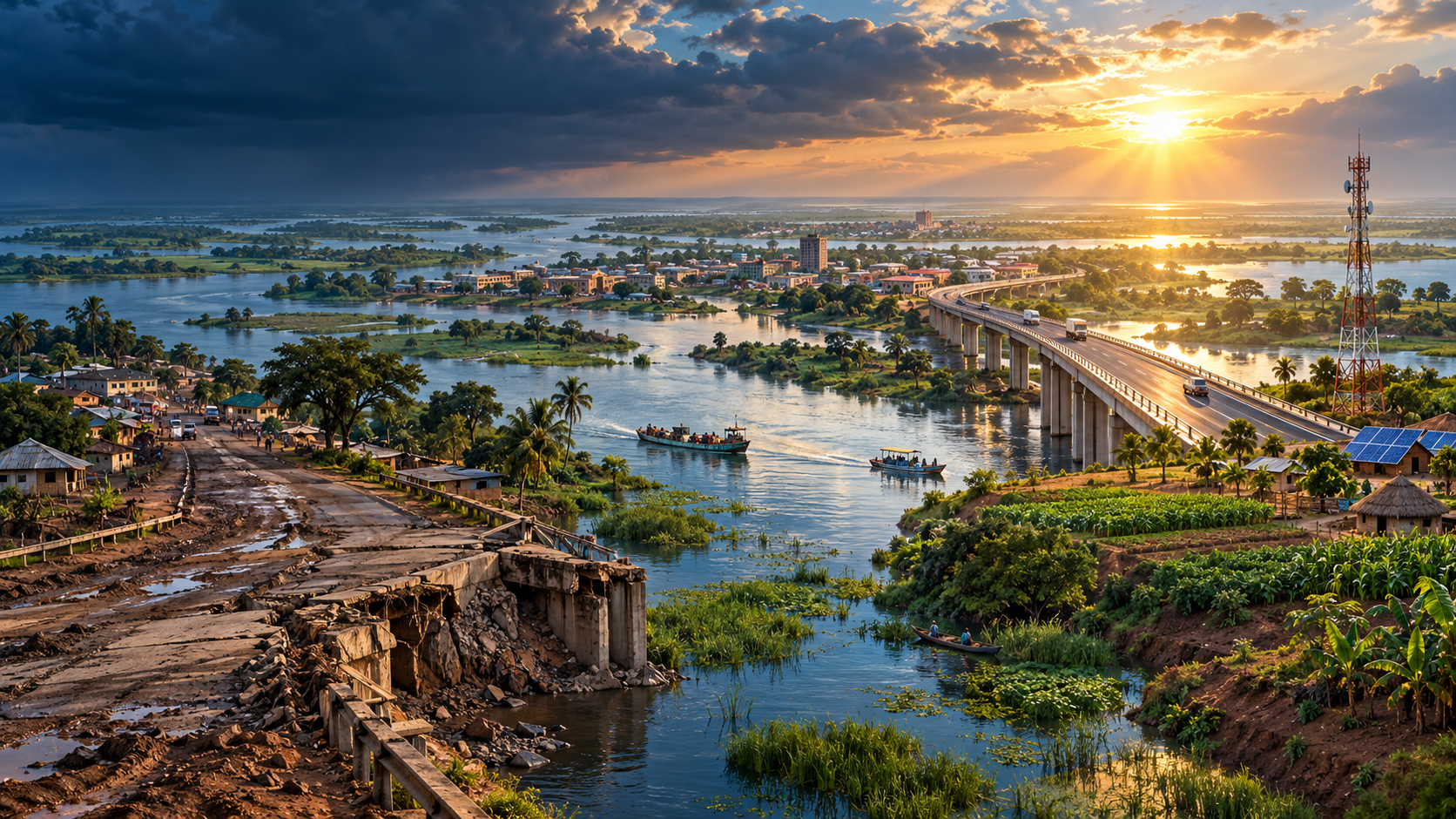
Illustrative editorial artwork: Upper Nile at a crossroads between instability and renewal. It is not documentary photography.
Upper Nile occupies one of South Sudan’s most important and vulnerable positions. It borders Sudan and Ethiopia, contains major oil-producing areas, hosts vital Nile transport routes and receives refugees and returnees fleeing the war in Sudan. Yet political instability, armed confrontation, displacement and weak administration continue to prevent those advantages from producing security or shared prosperity.
The dissolution of South Sudan’s transitional institutions on 22 September and the appointment of caretaker administrations have added a new layer of uncertainty. James Koang Chuol was named caretaker governor after the state government and legislature were dissolved. The arrangement may provide administrative direction, but it will deepen mistrust if communities conclude that appointments, public resources or security institutions are being used to consolidate political power before the proposed 22 December election.
Changing officials is not institutional reform
Upper Nile’s difficulties cannot be solved simply by replacing governors, ministers or county commissioners. The underlying problems include divided security structures, contested local authority, unresolved displacement, opaque revenue management and uncertainty surrounding the 2018 peace agreement.
When political relations deteriorate in Juba, the consequences are often felt more sharply in Nasir, Ulang, Maiwut, Longochuk, Baliet, Maban, Melut and Malakal. Traders hesitate to invest; farmers and fishers cannot reliably reach markets; humanitarian agencies face greater costs; civil servants go unpaid; and displaced families delay returning because they do not trust the security environment.
Pressure from Sudan
The war in neighbouring Sudan has turned Upper Nile into both a humanitarian corridor and a regional security frontier. UN agencies warned in August that 650,000 refugees and asylum seekers across South Sudan could lose food support amid a severe funding shortage. They also reported that the country was receiving roughly 3,000 new arrivals weekly at that time.
The pressure is particularly visible along the Renk–Malakal corridor, where border reception, onward transport, food, shelter and public services require resources that local authorities do not possess. Competition over scarce employment, accommodation and assistance can increase tension between returnees, refugees and host communities unless support is planned transparently.
A practical stability agenda
The caretaker administration should publish the appointment instruments, mandates and reporting responsibilities of state and county officials. It should also establish community early-warning arrangements linking chiefs, women, youth, police, humanitarian agencies and peace monitors.
Quarterly disclosure of oil-revenue transfers is equally important. Communities should be able to see what the state and producing counties received, which projects were approved and which contractors were paid. Civic space must also be protected: journalists, teachers and residents should not risk detention for questioning public spending or demanding salaries.
Finally, IGAD, RJMEC, CTSAMVM and South Sudan’s political actors must clarify the continuing status of the peace agreement, ceasefire obligations and monitoring arrangements. Local authorities cannot confidently manage security while the national framework remains disputed.
Sources and further reading
- Reuters, 22 September 2026: dissolution of the transitional government and election-law changes.
- Reuters, 14 August 2026: UN warning on refugee food-assistance cuts and continuing arrivals.