Unlocking Business Opportunities in Upper Nile State
Fisheries, agriculture, river trade and infrastructure could build an economy beyond oil—but only if investment protects communities and survives the climate.
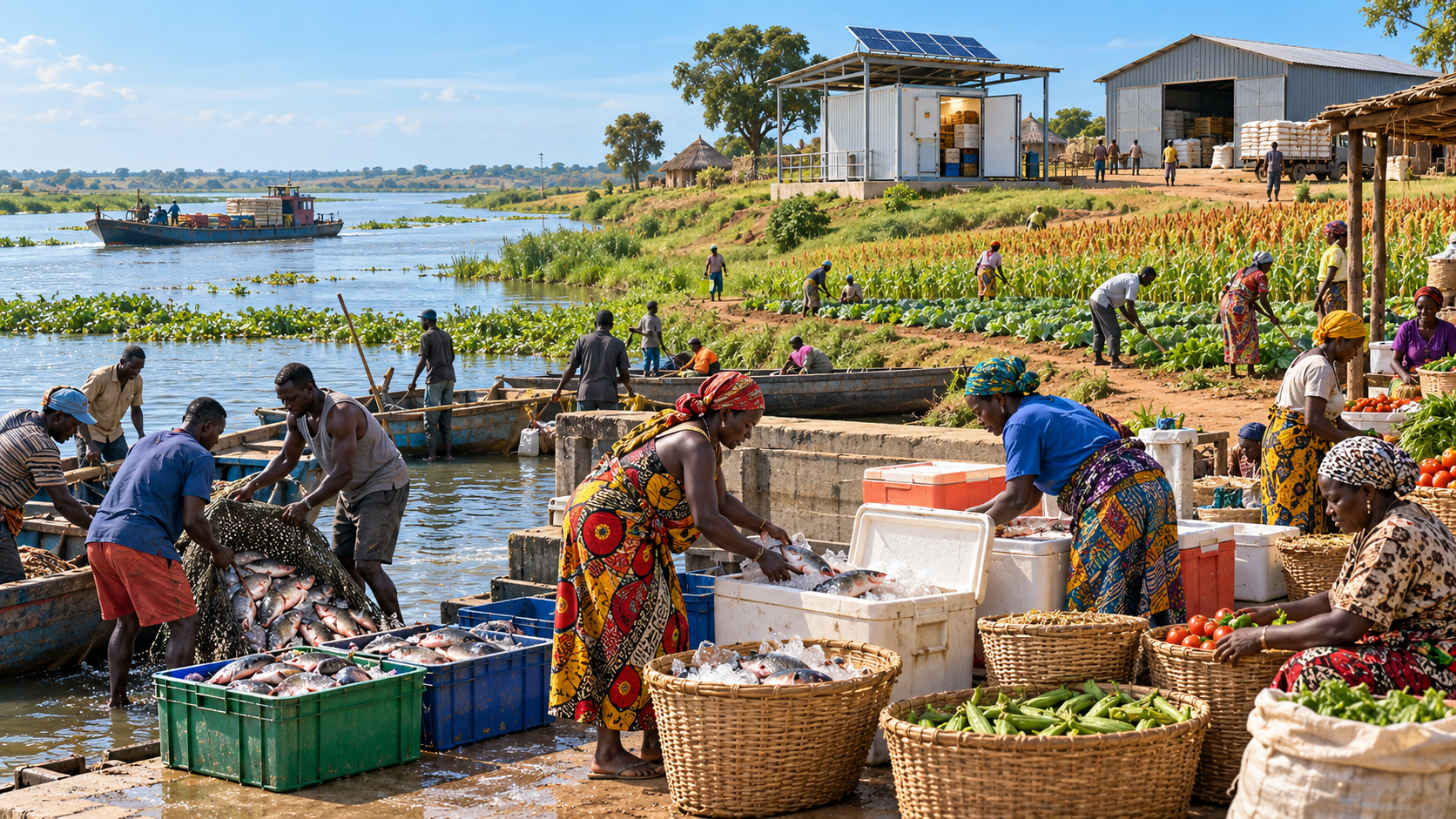
Illustrative editorial artwork showing possible fisheries, farming, storage and river-logistics development. It does not portray a specific existing facility.
Upper Nile is usually discussed through the language of conflict, humanitarian need and petroleum. That picture overlooks its considerable economic potential. The White Nile and Sobat systems support fishing, farming, livestock and trade. Malakal can serve as a logistics centre connecting northern South Sudan with the rest of the country, while Renk and eastern counties provide access to Sudan and Ethiopia.
The question is not whether resources exist. It is whether public authorities, communities and investors can create the security, infrastructure and transparent rules needed to use them sustainably.
Build a fisheries value chain
FAO estimates that as much as 95% of South Sudan’s population depends on farming, fishing or herding for food and income. In Upper Nile, fish is already a vital source of food and cash, but the trade remains constrained by spoilage, informal taxation and weak transport.
Solar ice plants, hygienic landing sites, cold rooms, insulated transport, drying facilities and cooperative marketing could allow fishers to retain more value. Boat repair, net production, safety equipment and market-information services would create additional businesses.
Expansion must include conservation. Licensing, seasonal rules and protection of breeding grounds should be designed with fishing communities rather than imposed without consultation.
Agriculture requires services, not slogans
Upper Nile can produce sorghum, maize, vegetables, sesame, groundnuts and livestock products. But insecurity, recurrent flooding, limited finance and poor market access keep production below its potential.
The most practical opportunities are services that small producers can use immediately: seed multiplication, equipment hire, veterinary care, raised storage, milling, oilseed pressing, packaging, irrigation pumps and mobile market-price information. These investments are less speculative than large land concessions and can spread benefits across many households.
Turn the rivers into trade infrastructure
Where roads are expensive or seasonally impassable, river transport can move passengers, food, construction materials and agricultural goods. A dependable corridor linking Juba, Bor, Malakal, Renk and Sudan could lower transport costs and strengthen internal commerce.
This requires navigational marking, vessel inspections, scheduled services, safe ports, predictable taxation and action against checkpoint extortion. Malakal port should be treated as productive infrastructure, not merely a transport terminal.
Infrastructure creates markets
Investment priorities include feeder roads to landing sites, solar mini-grids, telecommunications towers, warehouses, water systems, affordable housing, construction-material production and vocational centres. Public investment can de-risk these areas, while private operators provide services under transparent licences.
Land governance is essential. Community land must not be transferred through unpublished agreements. Investors should disclose beneficial ownership, complete environmental and social assessments, consult customary landholders and establish accessible grievance procedures.
Sources and further reading
- FAO South Sudan: national livelihoods and agrifood context.
- FAO Hand-in-Hand Investment Forum: agricultural and livestock investment context.