
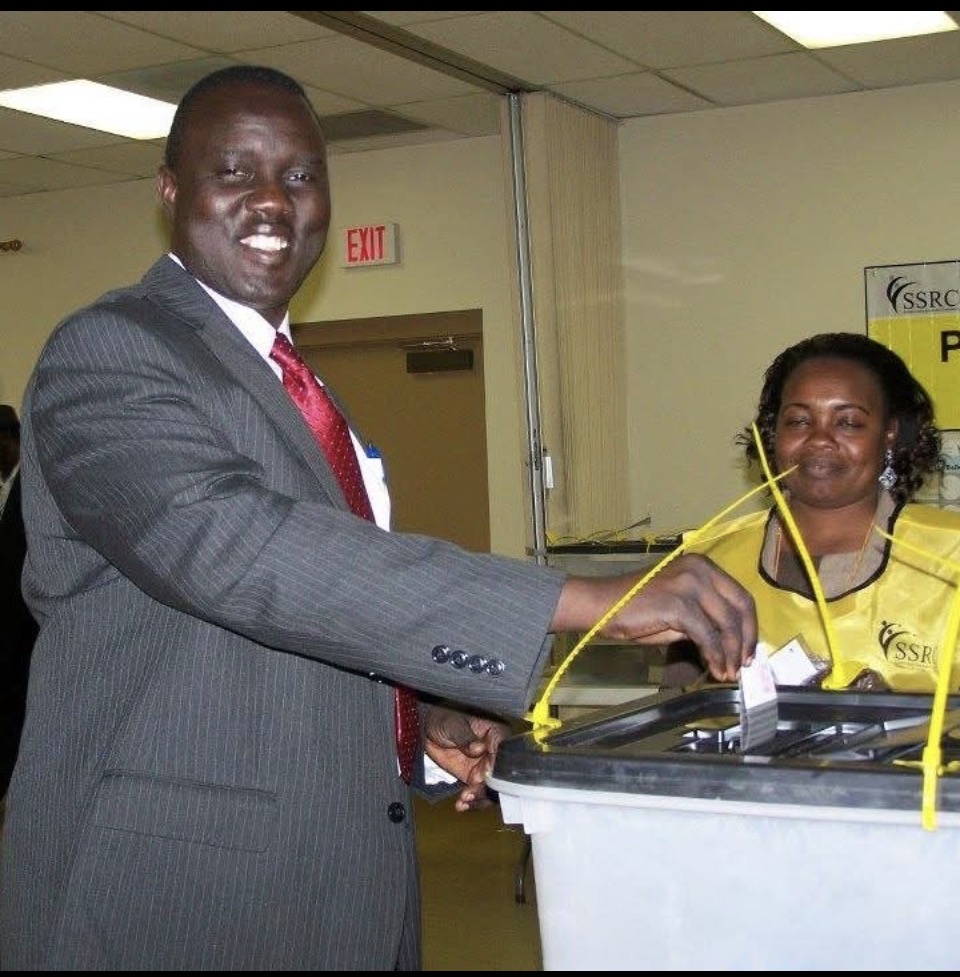
South Sudan’s diaspora is often spoken about in economic terms — as a source of remittances, professional expertise and international advocacy. But that framing is incomplete. The diaspora also carries political legitimacy rooted in history. In 2011, South Sudanese communities abroad participated in the referendum that led to independence, helping express a national consensus that statehood belonged not only to those living inside the territory but also to those displaced, exiled or settled abroad.
Fifteen years later, the country is preparing for elections that are supposed to signal a transition from prolonged interim arrangements toward more normal constitutional politics. Yet one of the most consequential democratic constituencies — the diaspora — risks being treated as an afterthought.
The referendum created a political expectation
The 2011 referendum and the 2026 elections are not the same kind of exercise. One was a self-determination vote; the other is meant to allocate political power within an independent state. Still, the referendum set an important precedent: South Sudanese abroad were recognized as part of the political community.
That matters because democratic belonging is not only about residence. It is also about citizenship, stake and contribution. Millions of South Sudanese outside the country remain deeply tied to events at home. They support relatives, finance education, respond to emergencies, shape public debate and often return with skills and investments. Excluding or minimizing their role in the electoral process sends a damaging signal that their sacrifices are welcome but their political voice is optional.
Why diaspora participation matters now
There are at least four reasons the diaspora question deserves serious attention in the run-up to the 2026 elections.
First, legitimacy. If the election is presented as a national milestone, then important parts of the nation cannot be casually left outside the conversation. A process that lacks a credible path for diaspora participation risks appearing administratively narrow and politically selective.
Second, accountability. Diaspora communities are often highly engaged with public affairs and less constrained by local patronage structures. Their participation can widen scrutiny of manifestos, campaign promises, governance performance and electoral credibility.
Third, civic ownership. South Sudan’s diaspora helped lobby, mobilize and sustain the cause of independence. Many continue to contribute financially and socially to the country’s survival. A democratic order that benefits from diaspora commitment should not ignore diaspora citizenship.
Fourth, national cohesion. In a fragmented political environment, diaspora inclusion can help connect citizens across regions and borders around a shared constitutional future, rather than leaving national politics to be defined only by those with proximity to state power.
What inclusion means
It does not simply mean symbolism. A statement praising the diaspora is not participation.
It means clear rules. Who qualifies, how registration works, where voting takes place and what protections apply must be defined in advance.
It means timely planning. Inclusion cannot be improvised at the last moment without undermining credibility.
The risk of selective democracy
The present concern is not merely technical. It is political. If organisers proceed with election preparations while failing to meaningfully consult diaspora communities or explain whether and how they will participate, suspicion will grow that inclusion is being weighed more by convenience than by principle.
That would be especially troubling in South Sudan, where questions of legitimacy, representation and trust already sit at the centre of national politics. Elections are not credible only because a date is announced or ballot papers are printed. They are credible when citizens believe the process belongs to them and that the rules are not designed to narrow participation.
The practical obstacles are real — but not decisive
It is true that diaspora participation involves legal, logistical and financial challenges. Registration would require clear eligibility rules, administrative coordination and cooperation across multiple countries. Authorities would need to identify voting centres, communicate timelines and ensure integrity safeguards.
But practical difficulty is not the same as democratic impossibility. If the state is serious about inclusive elections, then the relevant question is not whether diaspora participation is easy, but whether organisers are willing to make it a policy priority.
Even where full out-of-country voting proves impossible in the short term, authorities still owe the diaspora a transparent explanation, formal consultation and a clearly reasoned framework — not silence, improvisation or exclusion by neglect.
What a credible approach would look like
A more serious approach would begin with transparency. Election authorities and relevant institutions should publicly state whether diaspora participation is planned, under what legal basis, and on what timeline. Consultation should follow with community organisations, civil-society groups and South Sudanese missions abroad.
A credible framework would also separate three questions that are too often blurred together: diaspora voting, diaspora consultation and diaspora civic education. Even if voting mechanisms remain unresolved, there is no excuse for excluding diaspora voices from policy discussion or failing to provide clear election information to South Sudanese abroad.
In addition, any electoral conversation about inclusion should recognize the broader democratic role of the diaspora. These communities are not just absentee observers. They are investors, professionals, campaign audiences, opinion shapers and citizens with a long memory of how the nation was built.
A test of how inclusive the future will be
The deeper issue is what kind of political community South Sudan is trying to become. If the 2026 elections are meant to mark democratic progress, then they should not narrow the definition of who counts. A country whose diaspora stood with it at the decisive hour of self-determination should not now be told, explicitly or implicitly, that its voice is secondary.
The demand here is not for special privilege. It is for consistency. Those who were counted in the making of the nation should not be discounted in shaping its next political chapter.
This article is based on historical context from the 2011 referendum and the current public debate around election preparations, legitimacy and political inclusion.
Follow-up reporting should seek clarification from election organisers on legal provisions, timelines and any formal plan for diaspora consultation or participation in the 2026 process.