
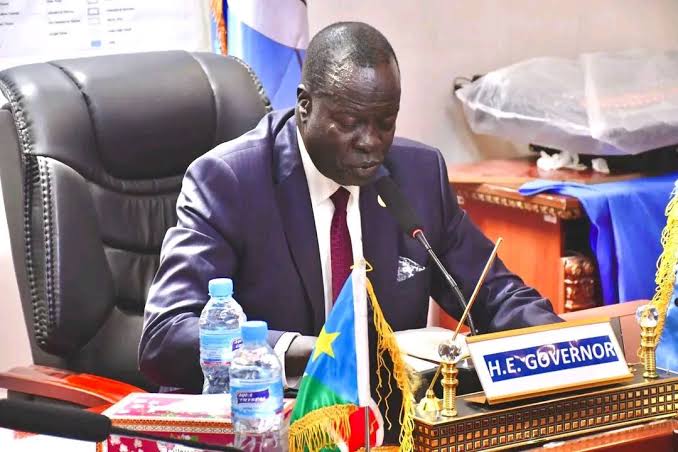
Upper Nile State Governor James Koang Chuol has ordered members of his cabinet who are based in Juba to return to Malakal, as the state administration moves to implement a series of administrative and development priorities.
The directive followed the Upper Nile Council of Ministers’ first regular sitting of 2026, held in Malakal on 23 July. According to a statement reported by Sudans Post, the cabinet also approved a reduction in technical advisers from 17 to seven and endorsed the state’s 2026 Development Agenda.
Bringing state government back to the state capital
The order raises a practical governance question: how effectively can a state administration function when senior officials spend extended periods away from the state capital?
For Upper Nile, where communities continue to face reconstruction needs, displacement, humanitarian pressures and weak infrastructure, the presence of ministers in Malakal could improve coordination with county administrations, public institutions and residents seeking government services.
However, physical presence alone does not amount to administrative reform. The more important measure will be whether ministries become consistently operational and whether the government publishes and implements clear priorities.
Cabinet also cuts adviser positions
The Council of Ministers approved reducing technical advisers from 17 to seven. The initial statement did not explain the criteria for the reduction, identify expected financial savings or provide further detail on the responsibilities of the remaining advisers.
The cabinet also endorsed the 2026 State Development Agenda and a proposal to change the Upper Nile State logo.
What an administrative reset should produce
Presence: ministers and senior officials consistently operating from Malakal.
Coordination: stronger links between ministries, counties and service providers.
Accountability: public reporting on priorities, budgets and implementation.
Delivery: measurable improvement in services rather than administrative reshuffling alone.
What remains unclear
The initial government statement did not specify why some ministers had remained in Juba or provide a detailed deadline beyond the instruction that they return immediately.
What South Sudan Press is watching
- How many affected ministers return to Malakal and when.
- Whether state ministries become consistently operational from the capital.
- Publication and implementation of the 2026 Development Agenda.
- The rationale and savings associated with reducing adviser positions.
- Whether the changes lead to measurable improvements in public services.