
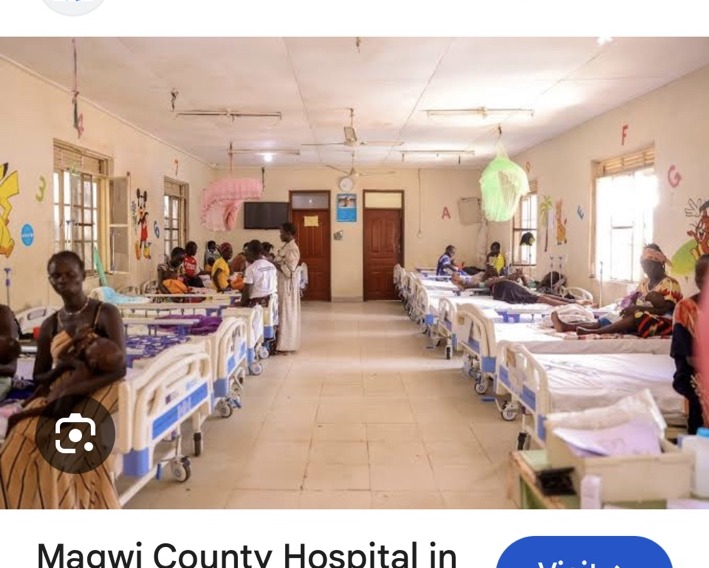
Health authorities in Magwi County, Eastern Equatoria State, are warning of continuing measles transmission after dozens of suspected cases were recorded across several communities over the past five months.
According to Eye Radio, Magwi County Health Director Dr. Oloya said health facilities had treated 88 suspected measles cases since March, of which 13 were laboratory-confirmed. Seven of those confirmed infections came from samples collected in August, suggesting that transmission was continuing late in the month.
Cases were initially detected in Abara and later reported in Oboe, Lubbone and other communities in the wider Magwi–Oboe area. Children under five are among those most affected.
Suspected cases are not the same as confirmed cases
The distinction is important. The figure of 88 represents suspected measles cases, while 13 infections were reported as laboratory-confirmed. No deaths were reported in the initial account reviewed by South Sudan Press.
At a glance
88 suspected cases reported since March.
13 laboratory-confirmed infections reported by county health authorities.
7 confirmed cases from samples collected in August.
0 deaths reported in the initial account.
Officials say a major containment response has not yet occurred
The county health director said no major intervention had yet been mounted and recommended a mass vaccination campaign. That raises an important public-health question because the first cases were reportedly identified as far back as March.
If transmission has continued for several months while cases spread geographically, authorities will need to establish why surveillance did not lead to a larger vaccination and containment response earlier.
Why measles requires a rapid response
Measles is a highly contagious viral disease that spreads when an infected person breathes, coughs or sneezes. WHO says it can cause severe complications, particularly among young children. Common symptoms include high fever, cough, runny nose, red or watery eyes and a rash that typically begins on the face before spreading across the body.
Serious complications can include pneumonia, severe diarrhoea and dehydration, ear infections, blindness and encephalitis. Risks are greater for children who are malnourished or have weakened immune systems.
Vaccination remains the main protection
WHO describes vaccination as the most effective way to prevent measles and recommends two doses of a measles-containing vaccine for children through routine immunisation or supplementary campaigns where coverage is inadequate.
That makes vaccination coverage in Magwi one of the most important missing pieces of information. Authorities have not yet publicly provided detailed figures showing how many children in the affected communities have received one dose, two doses or no measles vaccination.
Schools, churches and markets could accelerate spread
The geographic spread of suspected cases matters because Magwi communities are connected through schools, markets, churches, transport routes and family movement. Because measles spreads extremely easily among people without immunity, crowded environments and regular movement between communities can allow transmission to expand quickly.
That does not mean schools, churches or particular communities should be blamed for transmission. Public-health authorities instead need to ensure that places where people gather receive accurate information about symptoms, vaccination and what to do when a suspected case is identified.
What South Sudan Press is seeking to verify
- Whether the 13 laboratory-confirmed cases can be independently verified through the National Public Health Laboratory or Ministry of Health.
- Current measles vaccination coverage in Magwi County.
- The number of vaccine doses currently available.
- When a mass vaccination campaign or other major containment intervention will begin.
- Whether there have been hospitalisations or severe complications not yet reported publicly.
- Whether any deaths have subsequently been recorded.
- What surveillance is operating in neighbouring counties.
- Why an outbreak detected in March remained without a major containment campaign by late August.
Public information matters
Families who suspect measles should contact a qualified health-care provider as soon as possible and alert the facility before arrival where possible, so staff can reduce the risk of exposing others.
Authorities should publish vaccination locations only after they have been confirmed, rather than allowing unverified clinic information to circulate through social media.
People should also avoid stigmatising individual villages or families. Infectious diseases spread because of susceptibility and transmission conditions, not because any particular community is responsible for an outbreak.
The bigger test is response speed
Magwi’s reported outbreak illustrates a larger weakness common in fragile health systems: detecting disease is only the first step. Surveillance matters only if warning signals are followed by rapid investigation, vaccination, public communication and treatment.
Seven laboratory-confirmed cases emerging from August samples indicate that this is not simply a historical cluster from earlier in the year. If the county figures are confirmed, the next measure of success will be how quickly susceptible children are reached before transmission expands further.